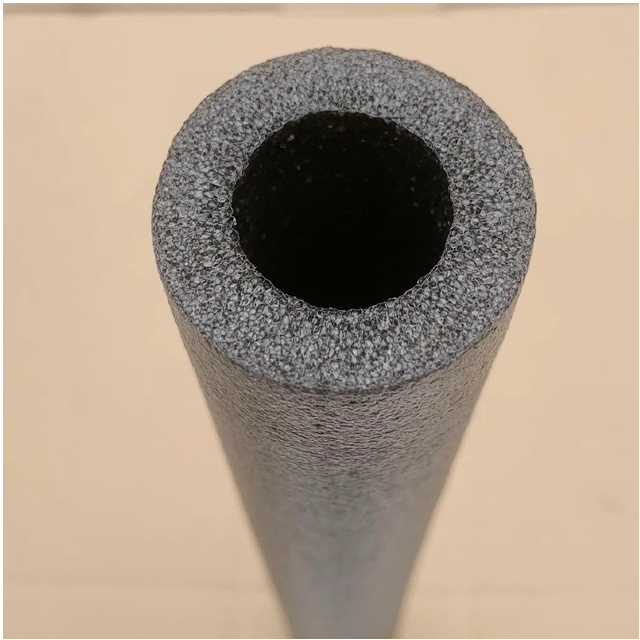
Temperature is the most critical technical factor for Insulation Tube — even a well-designed product only works if it matches real system conditions, including fluid temperature, ambient air, humidity and daily fluctuations. This article explains how temperature affects performance and how to choose the right material for HVAC applications.
Why Temperature Matters for Insulation Tube Performance
Temperature directly shapes structural stability, thermal resistance and moisture protection.
Thermal Stability Affects Efficiency
Exposure to out-of-range temperatures can damage foam cells, lowering thermal resistance and increasing energy transfer. A properly matched insulation tube maintains stable performance, reducing the load on compressors and heating equipment.
Surface Temperature Affects Condensation Risk
Cold pipes below ambient temperature easily reach dew point and form condensation. Closed-cell insulation stabilizes surface temperature and controls moisture effectively.
Temperature Cycling Affects Material Stress Over Time
Systems that switch on and off cause repeated expansion and contraction. High-quality insulation withstands cycling without cracking or separating at joints.
Cold-Line Performance and Condensation Control
Cold applications are especially demanding for temperature and moisture performance.
What Happens When Cold Pipes Meet Warm, Humid Air
Chilled pipes quickly attract condensation, leading to dripping, corrosion and structural damage without proper insulation.
Why Moisture Resistance Becomes Critical
Closed-cell materials like PE and rubber insulation block water vapor. Moisture absorption directly reduces thermal efficiency over time.
Why Sealed Joints Matter as Much as the Material Itself
Gaps at seams create weak spots for condensation. Consistent thickness and tight installation ensure full surface protection.
Hot-Line Performance and Heat Retention
Temperature resistance is equally vital for hot water and heating systems.
Reducing Heat Loss on Warm and Hot Lines
Insulation prevents energy loss in hot water, underfloor heating and solar pipelines, ensuring stable end-point temperatures.
Why Upper Temperature Limits Matter
Exceeding a material’s maximum service temperature causes softening and degradation. Continuous working temperature is more important than short-term peaks.
Why “Good Enough” Insulation Can Fail in Continuous Service
Prolonged heat exposure leads to gradual performance loss. Choosing temperature-stable products lowers maintenance and replacement costs.
How PE and Rubber Perform in Different Temperature Conditions
Material selection is key to temperature compatibility.
PE Insulation Pipe in General Cooling and Light-Duty Applications
LDPE PE insulation is widely used for refrigeration, water pipes, underfloor and solar systems. LUKWOM offers sizes from ID 6–50 mm and thickness 5–25 mm, with high-temperature versions available.
Rubber Insulation Tube in Broader and More Demanding Service Ranges
Rubber insulation is ideal for chilled water and fluctuating-temperature systems, with excellent flexibility for tight spaces and thermal cycling.
Why Flexibility Matters in Low-Temperature Handling
Flexible materials resist brittleness in cold conditions, maintaining integrity without cracking during expansion and contraction.
Temperature Is Not the Only Number That Matters
Other factors also affect thermal performance:
Pipe size and insulation thickness
Ambient humidity and airflow
Indoor or outdoor exposure
How Buyers Can Avoid a Temperature Mismatch
Match insulation to actual operating temperature range
Choose suitable materials for steady or cycling conditions
Prioritize moisture resistance in humid or chilled environments
Insulation Tube Performance Factors by Temperature Condition
Operating Condition
Main Risk
Better Material Direction
What to Check Before Buying
Chilled Water Lines
Condensation and heat gain
Rubber Insulation Tube
Moisture resistance and flexibility
Refrigerant Cooling Lines
Surface sweating
PE Insulation Pipe
Wall thickness and closed-cell quality
Hot Water Heating
Heat loss during transfer
PE Insulation Pipe
Continuous service temperature limit
Solar Energy Pipelines
Thermal fluctuation
PE Insulation Pipe
Stability under repeated exposure
Mixed Temperature Cycling
Material stress and cracking
Flexible Rubber Insulation
Elasticity and long-term durability
Conclusion
Choosing an insulation tube with the correct temperature range improves energy efficiency, prevents condensation and extends service life. LUKWOM provides PE and rubber insulation solutions for various HVAC temperature conditions with reliable quality and sizing options. Contact us for product details and technical support.
FAQ
1. What temperature range should insulation tube support?
The required temperature range depends on whether the pipe carries chilled fluid, hot water, or operates under cycling conditions. Insulation must match continuous service temperature.
2. Is PE insulation pipe suitable for heating systems?
Yes, polyethylene insulation tubes are widely used in underfloor heating and hot water systems when the operating temperature is within the material’s stable range.
3. Why is rubber insulation tube often used for chilled water lines?
Rubber insulation tube offers flexibility and strong moisture resistance, which helps reduce condensation in humid environments.
4. Does insulation thickness affect temperature performance?
Yes, thicker insulation generally improves thermal resistance and reduces heat transfer, especially for larger diameter pipes.