
Tel:
+86-551-6346-0808
Factory Add:
Plant 5-6, Zhongnan High Tech Industrial Park, Zhegao, Chaohu City, Anhui. 

Views: 0 Author: Site Editor Publish Time: 2025-12-25 Origin: Site
Rubber insulation tubes play a critical role in industries, offering vital protection against extreme temperatures. These tubes, typically made from synthetic rubbers like EPDM and NBR/PVC, are designed to prevent heat loss and condensation. In this article, we will delve into how rubber insulation tubes are made, covering everything from material preparation to the final product. You will also learn about the manufacturing processes that ensure the tubes meet industry standards and perform effectively.
The process of compounding rubber involves mixing various additives with synthetic rubber to enhance its properties. These additives improve the rubber’s flexibility, durability, and resistance to heat, fire, and UV degradation.
| Additive Type | Purpose | Common Examples | Effect on Rubber | Considerations |
|---|---|---|---|---|
| Curing Agents | Enhance elasticity and durability | Sulfur, Peroxides | Increases strength, heat resistance | Must be mixed evenly to ensure consistency. |
| Foaming Agents | Create closed-cell structure | Chemical Blowing Agents (e.g., Azodicarbonamide) | Forms air pockets for insulation | Critical for thermal performance, controlled quantities needed. |
| Plasticizers | Improve flexibility and ease of processing | Phthalates, Citric Acid Esters | Improves processability and flexibility | Too much can affect strength and stability. |
| Flame Retardants | Prevent fire hazards | Antimony Trioxide, Brominated Compounds | Reduces flammability of the insulation | Potential environmental concerns with some chemicals. |
| UV Stabilizers | Protect against degradation by sunlight | Hindered Amine Light Stabilizers (HALS) | Increases resistance to UV exposure | Important for outdoor or exposed applications. |
Tip: When choosing rubber insulation tubes, ensure the right additives are included to meet your environmental and performance requirements.
Additives are essential for enhancing the performance of rubber insulation tubes. Flame retardants help prevent fire hazards, while UV stabilizers protect the tube from degradation when exposed to sunlight. By incorporating these additives, the tube gains improved resistance to environmental factors, ensuring reliable performance in both industrial and residential applications. When selecting a rubber insulation tube, be sure to consider the additives used to meet your specific environmental and performance needs.
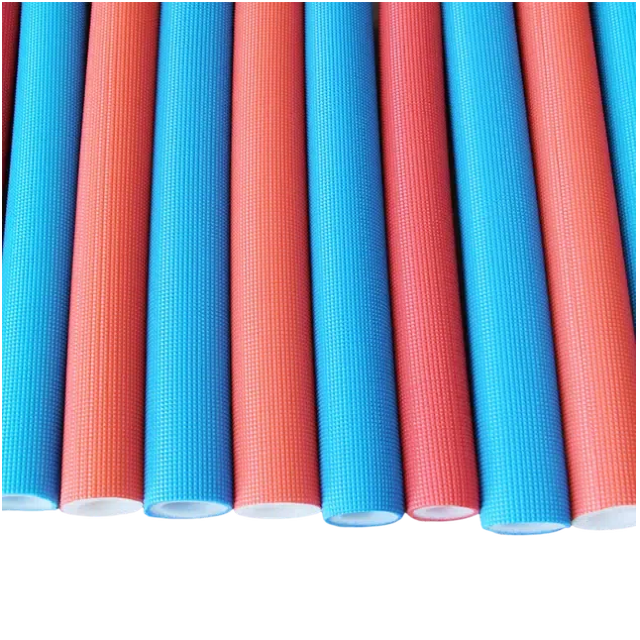
Once the rubber compound is prepared, it is fed into an extruder machine, where a rotating screw pushes the compound through a heated barrel. This process ensures that the material is evenly mixed and consistent, which is crucial for achieving a uniform structure in the final rubber insulation tube. The extruder maintains precise control over the temperature and pressure, allowing manufacturers to achieve the desired wall thickness and internal diameter. For example, controlling the extrusion temperature within the range of 140-160°C can help maintain optimal flexibility and durability in the rubber insulation tube, ensuring its performance in high-demand applications.
During the extrusion process, the rubber compound is shaped into a continuous tube with precise control over its dimensions. This ensures that the tube will perform as required for insulation and maintain uniformity throughout production.
| Step | Action | Outcome | Considerations | Performance Effect |
|---|---|---|---|---|
| Feeding the Compound | The rubber compound is pushed into an extruder machine using a rotating screw | Even mixing and consistency | Must be precise to avoid air pockets and inconsistent material flow | Ensures uniformity in the final product |
| Shaping the Tube | The material is forced through a die to form the tube shape | Controls the internal and external diameters of the tube | The die must be maintained to prevent blockage and shape distortion | Precision ensures tight tolerances |
| Continuous Tube Formation | Tube is formed continuously to the required length | Consistent length of tube | Length of the tube can be adjusted as needed for different applications | Helps meet the production needs of different insulation projects |
Tip: Regularly monitor the extrusion process for consistency in tube thickness to avoid performance issues and ensure reliable insulation.
The extrusion process forms a continuous tube with the precise length required for various applications, ensuring consistency in the final product. By controlling factors like temperature, pressure, and speed, manufacturers can maintain uniform wall thickness, which is essential for the tube's performance. Once formed, the tube is ready for further processing, including foaming and curing, which enhance its insulating properties and durability. Careful monitoring of the extrusion process is vital to avoid variations in wall thickness, which could lead to performance issues in the finished rubber insulation tube.
Blowing agents are added to create a closed-cell foam structure in the rubber, which provides excellent insulation by trapping air inside the material. This process is critical for achieving the thermal performance needed for energy efficiency.
| Blowing Agent Type | Purpose | Chemical Used | Effect on Final Product | Efficiency/Performance |
|---|---|---|---|---|
| Chemical-Based Agents | Create gas pockets within the rubber | Azodicarbonamide, Tetrafluoromethane | Forms a cellular structure, improving insulation properties | Essential for creating closed-cell structure; reduces heat transfer |
| Physical Blowing Agents | Use physical means to create foam | Nitrogen, Carbon Dioxide | Contributes to lightness and compressibility of the insulation tube | May result in lower thermal performance compared to chemical agents |
| Gas Expanding Agents | Promote expansion during heating | Water, Ammonium Carbonate | Creates a more uniform foam density across the tube | Can impact the uniformity of the final insulation properties |
Tip: For optimal thermal insulation, select closed-cell rubber insulation tubes, which offer better resistance to moisture and heat.
The foaming process results in a cellular structure within the rubber, which is key to its insulating properties. The tiny air pockets trapped within the rubber form a closed-cell structure, preventing heat transfer and moisture from entering. This structure is essential for maintaining the temperature of pipes and ensuring that the insulation performs optimally under various environmental conditions.
Tip: For applications requiring enhanced thermal performance, opt for closed-cell insulation tubes that offer better resistance to heat and moisture.
Vulcanization is the process that gives rubber its final physical properties. During vulcanization, the extruded tube is subjected to heat and pressure, which causes the rubber molecules to cross-link, forming a network of polymer chains. This chemical process enhances the elasticity, strength, and durability of the rubber, making it more resistant to wear and extreme temperatures.
Once the vulcanization process is complete, the rubber insulation tube takes on its final properties. It becomes more flexible, durable, and resistant to heat, ensuring that it can withstand the demands of insulation applications. The closed-cell structure formed during the foaming process is also solidified, improving the tube’s thermal performance and longevity.
Tip: The vulcanization process should be closely monitored to ensure that the rubber reaches the desired level of cross-linking for optimal performance.
After vulcanization, the rubber insulation tube is cut to the desired lengths, typically between 6 feet or 2 meters. In some cases, the tube may also be slit lengthwise to make installation easier, particularly for applications where the tube needs to be installed over existing pipes. The slitting process ensures that the tube fits snugly around the pipe without any gaps or misalignments.
Once the tubes are cut and slit, they undergo rigorous testing to ensure they meet industry standards, such as ASTM C 534 for thermal performance and vapor resistance. These tests check the insulation's ability to resist heat, moisture, and other environmental factors that could compromise its performance. Only tubes that pass these tests are deemed suitable for use in insulation applications.
Tip: Ensure that the rubber insulation tubes you purchase are tested and certified to meet industry standards for thermal and vapor resistance.
The mandrel process is used to create reinforced rubber tubes, particularly for heavy-duty applications. This method ensures that the tube has the strength and durability needed for high-pressure environments while maintaining its shape and performance.
| Process Step | Action | Purpose | Application | Performance Benefit |
|---|---|---|---|---|
| Mandrel Winding | Rubber strips are wound around a mandrel | Forms the internal diameter of the tube | Used for heavy-duty hoses and tubes requiring high strength | Provides high strength and durability |
| Curing in Autoclave | Cured in a pressurized steam oven | Cures the rubber to the final product | Ideal for reinforcement of tubes needing added support | Ensures precise curing under controlled conditions |
| Mandrel Removal | Mandrel is removed after curing | Frees the tube from the mandrel | Used in high-performance hoses like industrial or hydraulic lines | Guarantees the tube retains its intended shape without internal damage |
Tip: Use the mandrel process for tubes requiring high strength and resistance, especially in industries like hydraulics and heavy machinery.
Injection molding is used to create localized or complex structures within rubber tubes. In this process, molten rubber is injected into a mold cavity to form the desired shape. Injection molding offers high precision and allows for intricate designs that are difficult to achieve with traditional extrusion methods. This process is often used for producing rubber tubes with unique features or reinforcement.
In the calendering process, rubber compounds are passed through a series of rollers to compress them into thin sheets or films, which are then shaped into tubes or other forms as needed. This method is ideal for producing tubes with a smooth surface and consistent thickness, particularly for high-volume production of low-thickness tubes. The precision of the calendering process ensures uniformity across large batches, making it a preferred choice for applications that require mass production. When selecting a manufacturing method, consider your application’s needs—mandrel for heavy-duty use, injection molding for intricate designs, and calendering for efficient, high-volume production.
The production of rubber insulation tubes involves several key steps, including compounding, extrusion, vulcanization, and testing. Each phase ensures the final product is durable, flexible, and performs effectively in insulation applications. Whether produced through extrusion or alternative methods like the mandrel or injection molding process, choosing the right materials and production techniques is essential. Anhui Lukwom HVAC Equipment Co., Ltd. offers high-quality rubber insulation tubes that provide superior thermal performance, ensuring lasting protection for various industrial applications.


