Walk into two buildings with similar air-conditioning systems and you may notice a clear difference: one runs efficiently with stable temperatures and no dripping, while the other suffers from condensation, uneven cooling and energy waste. The key component behind this gap is the Insulation Tube. This article focuses on its real-world applications and why different projects need different insulation solutions.
Why Pipes Need Insulation in the First Place
Pipes carry hot or cold fluids through environments with very different temperature and humidity levels, making insulation essential.
To Hold Temperature More Effectively
Uninsulated pipes quickly exchange heat with air: cold pipes absorb heat, hot pipes lose warmth. An insulation tube uses low-conductivity material to slow heat transfer, keeping temperatures stable and improving system efficiency.
To Reduce Surface Sweating and Dripping
Cold pipes in humid air easily form condensation, which leads to dripping, staining, corrosion and damage. Closed-cell insulation tubes such as PE and rubber types block moisture contact and control condensation effectively.
To Improve Operating Efficiency Over Time
Uninsulated pipes force HVAC equipment to work harder, increasing energy use and mechanical wear. Insulation stabilizes temperatures, reduces system load and improves long-term efficiency.
Insulation Tube Use in Air Conditioning Systems
Air-conditioning systems are one of the most common environments where insulation tube is used.
Split AC Connection Lines
Residential and small commercial split AC units use insulated refrigerant lines. Poor insulation causes heat gain and condensation. PE insulation pipe is widely used for its light weight and reliable thermal performance.
Refrigerant Line Protection
Insulation tubes protect refrigerant lines running through walls, ceilings or outdoor areas, preserving temperature and providing physical protection against minor impacts.
Why Anti-Condensation Matters in Cooling Mode
Refrigerant lines run below ambient temperature, creating instant moisture in humid air. Closed-cell insulation minimizes penetration and dripping, especially in high-humidity climates.
Insulation Tube Use in Refrigeration and Chilled Applications
Refrigeration systems involve extreme temperature differences and high condensation risks.
Cold Lines Exposed to Warm Air
In cold storage, supermarkets and industrial cooling, insulation tubes reduce heat gain and maintain stable cold temperatures inside pipelines.
Moisture Control Around Chilled Pipes
Commercial chilled water systems are highly sensitive to condensation. Rubber insulation tube is preferred for its flexibility and strong moisture resistance, sealing joints tightly to avoid gaps.
Why Closed-Cell Materials Are Often Preferred
Closed-cell structure blocks air and water vapor, preventing internal moisture buildup. Both material structure and thickness matter for reliable refrigeration insulation.
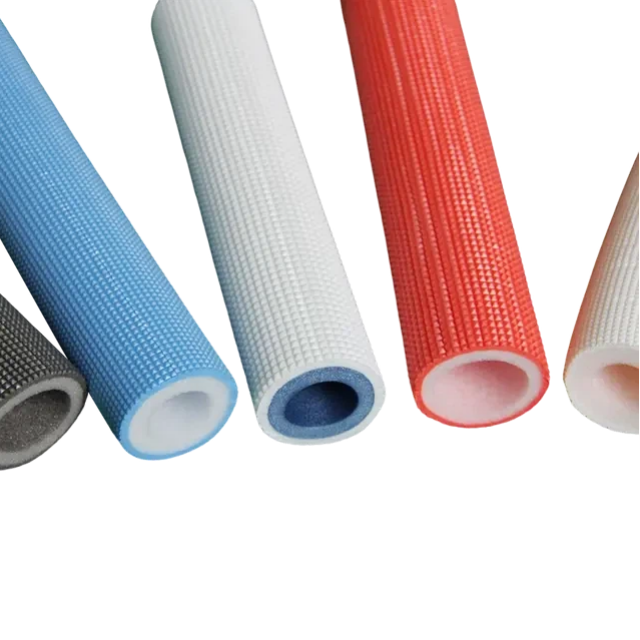
Insulation Tube Use in Hot Water and Heating Lines
Insulation is not only important for cold systems. Hot water and heating lines also benefit significantly from proper insulation.
Reducing Heat Loss During Transfer
Uninsulated hot water pipes lose heat during delivery, wasting energy and lowering end-point temperatures. Insulation retains heat and improves delivery efficiency.
Improving Temperature Delivery at the Endpoint
Stable temperatures are critical for underfloor heating and solar pipelines. LUKWOM LDPE foam insulation tubes provide consistent thermal performance with easy installation.
Supporting Energy-Saving Goals
Insulated heating lines cut energy waste, improve system predictability and help meet residential and commercial energy-saving targets.
Insulation Tube Use in Residential vs Commercial Projects
The environment where insulation tube is used also influences material selection and performance requirements.
Light-Duty Household Installations
Residential AC and water systems use PE insulation pipe for its easy installation and reliable performance. LUKWOM offers sizes from ID 6–50 mm and thickness 5–25 mm to cover household needs.
Repetitive Commercial HVAC Runs
Commercial buildings require long-lasting, dimensionally consistent insulation for extensive piping networks.
When Durability Becomes More Important
For pipes under mechanical stress, rubber insulation tube offers better flexibility around bends and fewer seam issues.
Which Product Form Fits Which Use?
Understanding where insulation tube is used also involves matching the correct product form to the application.
When PE Insulation Pipe Is the Practical Choice
Ideal for general HVAC, refrigeration, water supply and underfloor heating. Lightweight, easy to install and performs well for both cold and hot lines.
When PE Insulation Sheet Is Better for Custom Coverage
Suitable for irregular shapes, custom wrapping and extra layering on pipes or equipment surfaces.
When Rubber Insulation Tube Is Better for Flexibility and Tighter Bends
Best for tight spaces, complex layouts and elbows, ensuring continuous insulation coverage.
Common Insulation Tube Applications by System Type
Application | Main Risk Without Insulation | Recommended Product Form | Key Benefit |
Residential Split AC Lines | Condensation and cooling loss | PE Insulation Pipe | Stable cooling and moisture control |
Commercial Chilled Water Systems | Surface sweating and energy loss | Rubber Insulation Tube | Reduced condensation risk |
Refrigeration Equipment | Heat gain into cold lines | PE Insulation Pipe | Temperature stability |
Underfloor Heating | Heat dissipation during transfer | PE Insulation Pipe | Improved heat delivery efficiency |
Solar Energy Pipeline Insulation | Thermal fluctuation | PE Insulation Pipe | Consistent temperature retention |
Conclusion
Insulation tube selection depends on temperature difference, humidity, layout and project scale. Proper insulation improves energy efficiency, controls condensation and ensures stable operation for HVAC, refrigeration and heating systems.
LUKWOM provides professional PE and rubber insulation solutions for residential and commercial projects. For more details about our products and support, please feel free to contact us.
FAQ
1. Where is insulation tube most commonly used?
Insulation tube is commonly used in air-conditioning systems, refrigeration lines, chilled water systems, underfloor heating, and solar energy pipeline insulation.
2. Is PE insulation pipe suitable for both cooling and heating?
Yes, PE insulation pipe is widely used for cooling lines such as refrigerant pipes and for heating applications including hot water and underfloor systems.
3. Why is rubber insulation tube preferred in chilled water systems?
Rubber insulation tube offers flexibility and strong moisture resistance, which helps reduce condensation in humid environments.
4. Can insulation tube be used in commercial HVAC projects?
Yes, insulation tube products are widely used in commercial HVAC systems where long pipe runs require consistent thermal and condensation control.


