
Tel:
+86-551-6346-0808
Factory Add:
Plant 5-6, Zhongnan High Tech Industrial Park, Zhegao, Chaohu City, Anhui.


Views: 0 Author: Site Editor Publish Time: 2026-11-18 Origin: Site
Contractors and property owners constantly hunt for materials that balance project budgets with long-term reliability. Pure copper tubing used to be the undisputed gold standard for heat pump refrigeration lines. Then, global commodity markets became unpredictable. Copper prices skyrocketed. This economic squeeze forces builders to find alternatives fast. Does bi-metal piping actually work for high-pressure heat pump connections? Absolutely.
Modern composite tubing is a highly capable substitute. It simply requires rigorous manufacturing standards, precise installation, and proper environmental shielding. We will break down the technical feasibility and field protocols required for a successful install. Furthermore, we will explore the non-negotiable methods for stopping galvanic corrosion. Choosing a high-quality insulated copper aluminum pipe can safeguard your system's performance for well over a decade.
Proven Feasibility: Modern bi-metal tubing easily handles the extreme pressures and rapid thermal cycles of contemporary refrigerants like R410A and R32.
Cost vs. Performance: Alternative materials yield substantial financial savings and drastically reduce physical weight. You achieve this without sacrificing heat transfer capabilities.
Corrosion Prevention: Galvanic corrosion is the biggest threat. Factory-welded transition joints encapsulated in heavy-duty heat shrink sealing are absolutely mandatory.
Insulation Matters: Selecting the correct outer layer prevents condensation, minimizes thermal energy loss, and protects the inner tubing from the elements.
Installation Protocols: Traditional high-temperature copper brazing fails on aluminum. Safe field connections require mechanical press fittings or specialized low-temperature techniques.
For decades, pure copper remained the default choice due to its malleability and historical reliability. Today, the global commodities market dictates a different approach. The push for global electrification means heat pump installations are hitting record numbers. Supply chains are strained. Consequently, industry data shows a massive pivot toward bi-metal composites.
Market analysts project that alternative solutions will capture a dominant market share over the next decade. Heavy commercial applications might stick to pure copper for highly specialized runs. However, residential and light commercial sectors are adopting composite piping rapidly. The primary driver is basic economics. Procuring raw aluminum is vastly more economical. By blending these two metals—reserving copper strictly for connection stubs and utilizing aluminum for long straight runs—manufacturers slash production costs. This strategic allocation often yields a 30 to 50 percent reduction in piping expenses per project.
In addition to financial savings, the lightweight nature of aluminum provides a massive logistical edge. Imagine wrestling a heavy 50-foot copper line set up an extension ladder on a sweltering afternoon. Now imagine doing it with a material that weighs a third of that. The sheer weight reduction transforms a grueling chore into a highly manageable task. This speeds up installation times and reduces physical strain on technicians.
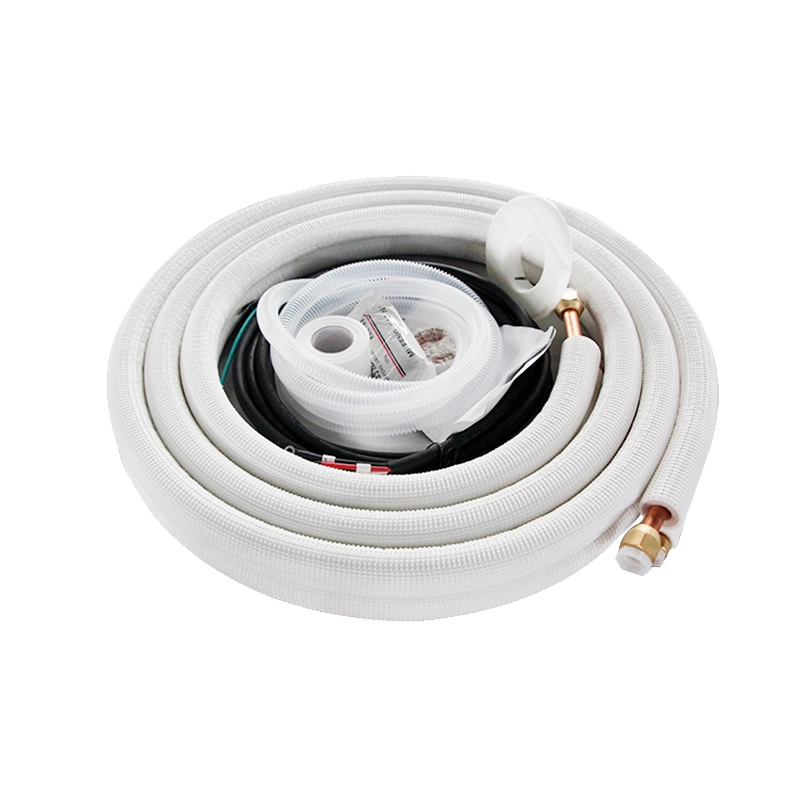
Unlike standard air conditioners that solely provide cooling, heat pumps reverse refrigerant flow to offer both heating and cooling. This operational duality means the lines face unique thermodynamic stresses. The viability of any alternative piping hinges entirely on its ability to endure these harsh conditions safely.
Modern refrigerants operate at significantly higher pressures than legacy fluids. An R410A or R32 system can easily push head pressures past 400 PSI during peak summer operation. High-quality bi-metal pipes utilize extruded aluminum alloys tested to burst thresholds way beyond these operating limits. Factory pressure testing ensures absolute safety under maximum load.
Furthermore, these systems endure rapid temperature fluctuations. During winter months, a heat pump periodically enters a defrost cycle. This melts ice off the outdoor coil, causing the internal temperature of the lines to swing from freezing cold to scalding hot within minutes. Rapid thermal cycles cause standard metals to expand and contract aggressively. Good metallurgical engineering ensures compatible thermal expansion coefficients between the copper and aluminum. This prevents the tubing from suffering fatigue, work-hardening, or micro-cracking under repetitive stress.
While the mechanical properties of aluminum are exceptional, joining it to copper presents a massive hurdle. When these two dissimilar metals touch in the presence of an electrolyte like moisture or salt air, a destructive electrochemical reaction begins. This is known as galvanic corrosion.
Copper is a highly noble metal. Aluminum is highly active. Because of their differing electrical potentials, aluminum acts as a sacrificial anode when moisture bridges the gap. Electrons flow from the aluminum to the copper. The aluminum wall rapidly oxidizes, pits, and thins out. Eventually, the high-pressure refrigerant bursts through. The result is a catastrophic system leak.
How do we stop it? Reputable manufacturers refuse to rely on field technicians to make this critical connection. Instead, the industry standard relies on factory-engineered transition joints. Advanced friction welding fuses the two metals at a molecular level without filler material. Immediately after welding, the factory encapsulates the entire joint in heavy-duty, adhesive-lined heat shrink tubing. This hermetic seal completely blocks moisture and oxygen. Galvanic corrosion becomes physically impossible.
In contrast, field brazing raw copper directly to raw aluminum is a guaranteed callback. The melting point of aluminum is dangerously close to the working temperature of standard silver brazing alloys. Attempting this connection on-site usually results in a melted tube or a weak, leak-prone joint.
The long-term success of a bi-metal line set relies heavily on the installer's skill. Technicians must adapt their traditional copper-working habits to accommodate the unique physical properties of aluminum. A flawless operation can easily last over a decade.
Proper preparation requires a delicate touch. Aluminum is softer than copper. You must use sharp, dedicated mechanical tube cutters to achieve a perfectly square cut. A dull blade simply crushes the pipe wall. Crucially, never use a hacksaw or reciprocating saw. Sawing generates tiny metallic shavings known as swarf. If swarf enters the lines, it travels directly to the compressor and causes severe internal scoring.
Mechanical press fittings have become the preferred connection method. Using specialized hydraulic tools, technicians press a fitting over the pipe to create a cold, permanent, gas-tight seal. This completely eliminates the introduction of heat and internal oxidation. Alternatively, you can use standard flare connections on the copper stubs provided at the ends of most bi-metal pipes. This allows for easy attachment to the heat pump service valves. If flaring the aluminum side is absolutely necessary, exercise extreme caution. Over-tightening the flare nut will crush and split the flare wall. Always adhere to strict torque specifications using a calibrated torque wrench.
Heat pumps transfer both heat and cold depending on the season. Therefore, refrigeration lines must be heavily and continuously insulated. Proper insulation prevents critical thermal energy loss. It also stops condensation from forming on the suction line during cooling mode, which prevents severe water damage to surrounding building framing.
Factory-applied insulation saves hours of intensive labor and guarantees a tight vapor barrier. Contractors typically choose between two primary outer layer options tailored to different environments. To help streamline your material procurement, review the core specifications below.
Feature |
Rubber Insulation Option |
PE Foam Insulation Option |
|---|---|---|
Material Structure |
Closed-cell elastomeric foam |
Cross-linked polyethylene cellular foam |
Flexibility |
Extremely high; conforms easily to tight bends |
Moderate; highly rugged and tear-resistant |
UV Resistance |
Low; requires secondary PVC cover outdoors |
High; built-in resistance to weathering |
Ideal Application |
Indoor runs, tight crawlspaces, winding attics |
Outdoor runs, commercial rooftops, harsh climates |
For complex residential structures, flexibility is paramount. An Insulated Copper-Aluminum Pipe (With Rubber Insulation) provides significant advantages here. The pliable foam conforms to necessary bends without tearing. It offers exceptional condensation control for indoor installations. However, bare rubber degrades under direct ultraviolet sunlight if left exposed.
For demanding outdoor environments or areas prone to physical abrasion, an Insulated Copper-Aluminum Pipe (With PE Insulation) is often the optimal choice. The rugged exterior provides built-in resistance to UV rays, extreme weathering, and minor physical impacts from landscaping tools. This ensures long-lasting thermal resistance with minimal maintenance.
When evaluating material options, the decision comes down to balancing initial budgets against long-term peace of mind. A comprehensive comparison reveals distinct advantages for modern composite lines.
Bi-metal piping provides unparalleled upfront value. Utilizing composite piping consistently reduces material expenses. On large commercial projects requiring hundreds of feet of tubing, these savings amount to thousands of dollars. From a durability standpoint, a properly installed composite pipe is incredibly resilient. As long as galvanic corrosion is prevented and connections are torqued correctly, the alternative effortlessly matches the 12 to 15-year expected lifespan of the heat pump compressor itself.
An often-overlooked benefit is theft deterrence. Copper theft is a devastating issue for property owners. It results in the loss of expensive refrigerant and catastrophic damage to outdoor condenser units. Aluminum has negligible scrap value. Once thieves realize the lines are predominantly aluminum, they typically abandon the unit. This provides unexpected security and saves thousands in potential emergency repair costs.
Verifying compliance with strict industry safety standards is an absolute necessity. The HVAC industry is heavily regulated to prevent environmental contamination and protect consumer safety.
Historically, some equipment manufacturers strictly mandated pure copper. They threatened to void warranties if alternatives were used. Today, the engineering of factory-welded transition joints has perfected. This stance has dramatically softened. The vast majority of leading heat pump brands explicitly approve the use of bi-metal line sets, provided they meet specific burst pressure requirements outlined by ASTM standards. Always consult the specific installation manual before making a material substitution.
Furthermore, local municipal codes dictate the characteristics of the insulation covering the pipes. When routing line sets through interior walls or commercial return-air plenums, the insulation must pass rigorous fire and smoke development tests, such as ASTM E84. Ensure your chosen product carries the necessary certifications for your specific jurisdiction to guarantee a smooth inspection process.
When installed correctly, a high-quality bi-metal line set will last just as long as the heat pump system itself, typically 15 to 20 years. The key to this longevity is ensuring the factory-sealed transition joints remain intact and that the outer insulation protects the piping from environmental damage. As long as moisture is kept away from the dissimilar metals, the pipe will not degrade prematurely.
Yes, it is highly recommended for ductless mini-split systems. These line sets often come pre-flared with copper stubs on both ends, making connection to the indoor head unit and outdoor condenser incredibly simple. The lightweight and flexible nature of the aluminum mid-section makes routing the lines through exterior wall holes and plastic line-hide covers much easier than wrestling with stiff, heavy copper.
No, utilizing this composite pipe will not negatively impact your system's efficiency. While pure copper possesses a slightly higher raw thermal conductivity rate, this difference is completely negligible within the context of a standard refrigeration line set. The primary heat exchange occurs inside the evaporator and condenser coils. As long as the pipes are properly sized and heavily insulated, your heat pump will operate at its fully rated efficiencies.
Yes, but it requires significantly more care and proper tooling. Aluminum is inherently softer and more malleable. It is much more susceptible to kinking or collapsing if bent too sharply by hand. Technicians should always use a mechanical tube bender or a specialized internal spring bender. These tools provide continuous support to the pipe walls. Installers should aim for wider, sweeping radiuses rather than tight angles.
If a leak occurs in the aluminum section, the repair process differs entirely from traditional brazing. Aluminum has a much lower melting point, making field-brazing highly difficult. The industry-approved repair method is mechanical splicing. A technician cleanly cuts out the damaged section with a dedicated tube cutter and uses HVAC-specific mechanical press fittings to splice in a new piece of tubing.
Generally speaking, yes. Polyethylene foam insulation is widely considered superior for outdoor applications where the piping faces direct exposure to the elements. PE insulation features a highly durable, cross-linked outer shell that naturally resists degradation from ultraviolet rays and heavy rain. Standard bare elastomeric rubber tends to dry out and crack when exposed to direct sunlight over several years.
Resistance typically stems from a lack of familiarity with modern materials and a lingering stigma from historical industry failures. In the 1990s, early iterations of transition pipes suffered from severe galvanic degradation. However, modern manufacturing techniques—specifically advanced friction welding and hermetic heat-shrink sealing—have completely eliminated the moisture required for a galvanic cell to form. Technicians who stay updated on modern standards understand these historical problems have been resolved.
Transitioning to modern composite piping is a smart, data-driven decision for today's demanding HVAC landscape. By understanding the metallurgy, respecting the installation protocols, and selecting the right exterior protection, you can deliver highly efficient, budget-friendly heating and cooling solutions. Ready to upgrade your next project? Explore high-performance, factory-tested piping solutions and complete installation kits at Lukwom to ensure your heat pump systems run flawlessly for years to come.


