
Tel:
+86-551-6346-0808
Factory Add:
Plant 5-6, Zhongnan High Tech Industrial Park, Zhegao, Chaohu City, Anhui.


Views: 0 Author: Site Editor Publish Time: 2026-11-14 Origin: Site
In any commercial refrigeration or HVAC network, compressors and refrigerants typically steal the spotlight. They handle the heavy thermodynamic lifting required to remove heat and maintain strict temperature controls. Yet, the critical component enabling this entire process is often overlooked. Without a robust thermal envelope, even the most technologically advanced cooling equipment will struggle to operate efficiently.
Thermal barriers are not permanent fixtures. Relentless environmental stress, violent temperature shifts, and unavoidable physical wear inevitably degrade these materials. When this happens, systems experience profound inefficiencies. Operational costs skyrocket. Premature mechanical failures become imminent.
Specifically, we are witnessing a massive industry shift toward predictive maintenance. Global energy costs are surging, and corporate sustainability mandates are tightening. In response, facility managers are realizing that proactively managing insulation health is no longer optional. It is a core financial strategy. Monitoring thermal efficiency prevents systemic energy waste and aligns with modern ESG environmental, social, and governance goals.
This comprehensive guide provides HVAC technicians, facility managers, and commercial property owners with front-line engineering perspectives. You will learn how to identify precisely when your thermal barriers have reached the end of their useful life. By understanding the severe risks of ignoring degraded materials and mastering the selection of optimal replacements, you can safeguard your infrastructure and maximize your return on investment.
Lifespan Expectations: Standard elastomeric foam typically lasts 10 to 15 years under controlled indoor conditions. Outdoor exposure and harsh industrial environments often slash this timeline to five years or fewer.
Visual and Physical Cues: Persistent condensation, visible surface fracturing, seam shrinkage, and general brittleness are empirical indicators demanding immediate replacement.
Financial Impact: Compromised thermal barriers force refrigeration equipment to run longer cycles. This relentless strain inflates monthly utility bills and elevates the risk of catastrophic compressor burnout.
The Upgrade Solution: Swapping degraded materials for modern high-density closed-cell alternatives guarantees superior moisture resistance. This strategic upgrade drastically extends the operational lifespan of the entire cooling network.
Refrigeration networks lean heavily on thermal barriers to lock in precise temperatures and curb energy waste. The actual longevity of these protective layers hinges on a complex interplay of environmental and operational variables. How long should you expect your materials to last?
Consider a controlled indoor environment with stable ambient temperatures, like a climate-controlled commercial basement. Here, the average life expectancy of standard refrigeration insulation ranges from 10 to 15 years. In these sheltered spaces, elastomeric foam easily maintains its structural integrity and thermal resistance. However, real-world applications frequently introduce harsh variables that accelerate the aging process.
Several external stressors can compromise the cellular structure of the foam and trigger premature failure. Direct sunlight acts as kryptonite to synthetic polymers. On outdoor AC and refrigeration lines, relentless ultraviolet radiation triggers photodegradation. This chemical breakdown severs polymer chains. The outer layers chalk, crack, and eventually disintegrate into dust if left without protective jacketing.
Furthermore, refrigerant lines endure constant cycles of freezing and thawing. These violent temperature shifts force the material to expand and contract endlessly. Thermal fatigue fractures the internal cellular matrix and strips the foam of its elasticity.
Physical damage is another major culprit. Insulation is inherently soft and highly vulnerable to mechanical impact. Maintenance crews might inadvertently crush the material while servicing adjacent valves. In industrial or rooftop settings, the foam often falls victim to nesting pests, heavy foot traffic, or flying environmental debris.
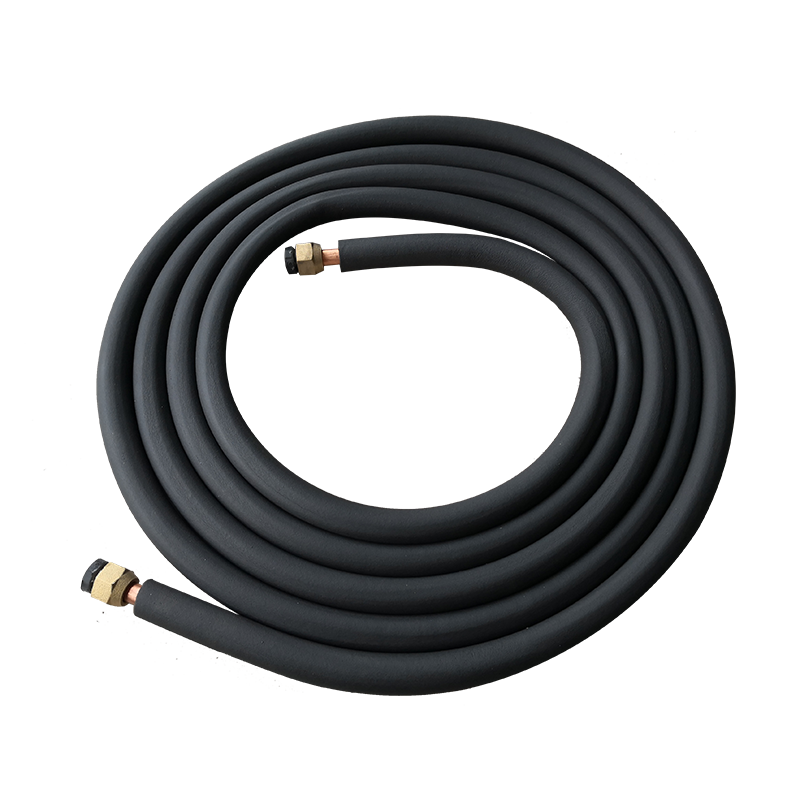
Spotting insulation failure in its infancy saves property owners thousands of dollars in wasted energy and emergency repairs. Below are five unmistakable symptoms indicating your thermal barrier requires immediate intervention.
The most glaring red flag of a failing thermal barrier is water droplets pooling on the exterior of the pipe. This is universally known as sweating. The fundamental job of refrigeration insulation is to keep the surface temperature above the ambient dew point. If water is actively dripping onto your mechanical room floor, the barrier is breached. The freezing copper pipe is colliding directly with humid ambient air, proving the material has lost its thermal resistance.
A quick visual sweep reveals volumes about the health of your system. Inspect the entire piping run for surface fissures, micro-tears, or punctures. Even microscopic breaches invite ambient moisture to infiltrate the foam. Once inside, this trapped moisture freezes against the frigid pipe. It expands violently and physically shreds the insulation from the inside out.
As elastomeric polymers age, they slowly bleed out their volatile compounds and plasticizers. This chemical loss causes the material to physically shrink. Intense longitudinal tension pulls the seams apart. If you spot gaping holes at the butt joints exposing bare copper to the elements, your system is hemorrhaging thermal efficiency.
A robust thermal barrier relies on flexibility to maintain a suffocating seal around the pipe during thermal shifts. It should feel soft, pliable, and resilient. In contrast, if the foam feels crusty, rigid, or crumbles into a fine powder when gently squeezed, it has suffered severe oxidative degradation. Brittle foam retains zero insulating properties and must be stripped away.
Occasionally, the loudest warning signs are financial rather than visual. Physical degradation directly correlates with a plummet in thermal efficiency. When the barrier fails to block ambient heat, the refrigerant warms up before ever reaching the compressor. Consequently, the unit must run aggressive cycles to hit target temperatures. The result is a steady, baffling spike in your monthly utility costs.
Postponing the replacement of degraded foam might masquerade as a savvy cost-saving measure for the current quarter. In reality, it creates a devastating cascade of operational and structural liabilities. Deferred maintenance on thermal systems is a leading cause of premature HVAC replacements across commercial sectors.
Poor insulation guarantees unwanted heat gain along the suction line. When refrigerant returns to the compressor significantly warmer than design specifications, the compressor is forced to operate well beyond its rated capacity. This chronic overworking breeds intense internal heat. It accelerates mechanical wear and ultimately triggers catastrophic compressor failure. That repair bill will easily dwarf the cost of new foam.
Condensation raining down from uninsulated pipes creates a nightmare scenario. In commercial spaces, pooling water instantly creates severe slip-and-fall liabilities. Beyond immediate safety risks, chronic moisture exposure rots drywall and destroys acoustic ceiling tiles. It also fuels the explosive growth of toxic black mold. Remediating a severe mold infestation is exponentially more disruptive and expensive than simply re-insulating a pipe.
Corrosion Under Insulation remains one of the most insidious, multi-million-dollar threats in the industrial refrigeration sector. When moisture becomes trapped beneath degraded or open-cell foam, it creates a highly localized, corrosive micro-environment against the steel or copper piping. Because the water cannot evaporate, it silently eats away at the metal. This hidden oxidation inevitably leads to pitting, structural collapse, and environmentally disastrous refrigerant leaks.
When the time comes to overhaul your system, material selection dictates future success. Transitioning away from outdated, porous materials and investing in premium engineering provides a measurable, long-term return on investment.
The true genius of modern insulation lies in its microscopic cellular architecture. Upgrading to a premium Flexible Closed Cell Rubber Insulation Tube offers a distinct engineering advantage. Millions of tiny gas pockets within the foam are completely sealed off from one another. Water vapor simply cannot wick through the matrix. High-quality closed-cell materials typically boast a water vapor resistance factor exceeding 10,000. This impermeable structure acts as a built-in vapor retarder, virtually eliminating internal condensation.
Closed-cell structures trap inert gases that inherently possess incredibly low thermal conductivity. For instance, top-tier rubber insulation maintains a thermal conductivity as low as 0.034 W/m·K at zero degrees Celsius. This creates an elite barrier against heat transfer. By locking in stable internal temperatures regardless of sweltering external conditions, the material drastically reduces the thermodynamic load on the compressor.
Performance Metric |
Degraded / Standard Foam |
Premium Closed-Cell Rubber |
|---|---|---|
Moisture Resistance |
Low. Highly prone to vapor wicking and internal freezing. |
Extremely High. Built-in vapor retarder blocks moisture drive. |
Thermal Conductivity |
Degrades rapidly as moisture infiltrates the material. |
Stable long-term performance (approx. 0.034 W/m·K). |
Flexibility & Installation |
Becomes brittle, tears easily around complex pipe fittings. |
Maintains high elasticity from -50 to 105 degrees Celsius. |
Fire Safety |
Often lacks modern flame retardant properties. |
Typically Class 0 or B1 rated, self-extinguishing. |
Procuring the correct thermal barrier requires far more than just eyeballing the pipe size. To achieve flawless condensation control, you must meticulously match the product specifications to your facility's unique microclimate.
Proper fitment is absolutely non-negotiable. The inner diameter of the foam must hug the outer diameter of the copper pipe flawlessly. A loose fit creates dead air pockets that breed internal condensation. Conversely, a stretched, overly tight fit compresses the closed cells and ruins the insulating value.
Calculating the correct wall thickness depends entirely on the line temperature paired with ambient humidity. A standard suction line in a normal 50 percent relative humidity environment may only need a 3/8-inch wall. Drop that pipe to sub-zero temperatures in a severe 80 percent humidity environment, and you will need a full 1-inch or 1.5-inch thickness to prevent sweating. Always consult psychrometric charts for precise sizing.
The physical installation environment dictates the level of armor your insulation requires. For standard indoor runs hidden above drop ceilings, a high-quality Rubber Foam Insulation is perfectly adequate. Rooftop units baking in the summer sun demand specialized protection. Outdoor applications require foam equipped with a factory-applied UV-resistant cladding or the manual application of aluminum jacketing to deflect solar degradation and scavenging birds.
Even the most expensive, space-age materials will fail spectacularly if installed with sloppy techniques. Strict adherence to professional installation protocols is the only path to a moisture-proof seal.
Never install new foam over grimy, wet pipes. Installation crews must meticulously scrub the copper lines with a commercial degreaser and ensure they are bone-dry before proceeding. Trapping residual moisture, machine oil, or construction dust under the new barrier will instantly sabotage the adhesive bonds and kickstart the corrosion process.
The survival of the entire thermal envelope rests on the integrity of its seams. You must utilize specialized, manufacturer-approved contact adhesives to weld all longitudinal seams and butt joints together. Relying on zip ties or standard duct tape is a rookie mistake. These will quickly degrade, leaving gaping holes as the pipe expands and contracts. When joining two sections of a Rubber Insulation Tube, utilize the push-don't-pull technique. Forcing the ends together under slight compression before gluing ensures the joint will not pull apart as the material naturally ages.
Proactive upkeep is the ultimate key to maximizing the lifespan of your infrastructure investment. A handful of simple, routine checks can stop minor wear and tear from snowballing into systemic failures.
Facility directors should enforce a strict bi-annual inspection cadence. This is perfectly timed during pre-summer and pre-winter preventative maintenance sweeps. Technicians should physically walk the lines, gently squeezing the foam to check for hardening while hunting for micro-tears or unglued seams. Catching a tiny tear early stops moisture from infiltrating and rotting out a ten-foot section of pipe.
For exterior lines lacking rigid metal jacketing, applying a specialized, water-based acrylic UV-protective paint every three to five years is critical. This sacrificial layer absorbs the brunt of solar radiation. It shields the underlying rubber polymers from chemical breakdown and ensures the lines survive their maximum intended lifespan.
A compromised thermal barrier is far more than a mere cosmetic blemish. It is a direct, aggressive threat to the efficiency, safety, and mechanical longevity of your entire refrigeration network. Replacing degraded, shrinking, or brittle foam is a relatively low-cost maintenance task. Yet, it yields a staggering return on investment through immediate energy savings and the prevention of catastrophic compressor failures.
Do not wait for puddles to form on your mechanical room floor. Inspect your current cooling systems today. If you identify signs of failure, upgrade to premium high-density, flexible closed-cell rubber insulation. For facility managers looking to secure top-tier thermal efficiency and safeguard their infrastructure, visit Lukwom to explore a comprehensive range of professional-grade insulation solutions tailored to your exact specifications.
Typically, elastomeric foam should be replaced every 10 to 15 years. However, outdoor units or piping located in high-humidity, caustic industrial environments may demand replacement every 5 to 7 years. Regardless of calendar age, swap out the material immediately if empirical signs of condensation, severe shrinkage, tearing, or crumbling brittleness appear during routine facility inspections.
Taping is strictly a temporary bandage for highly superficial, minor surface abrasions. If the foam has already shrunk, hardened, or is actively allowing condensation to form, wrapping it in tape will disastrously trap existing moisture against the pipe. This trapped water will rapidly accelerate metallic corrosion and further obliterate the thermal barrier. Full replacement is the only viable solution for compromised sections.
Yes, the impact is severe. Damaged or missing foam allows the frigid refrigerant to absorb massive amounts of ambient heat before it ever reaches the evaporator coil. This premature heat gain drastically cripples the overall cooling capacity of the system. It forces the compressor to run much longer, punishing cycles just to achieve the baseline indoor temperature.
Open-cell insulation features interconnected air pockets, making it highly porous. It absorbs water much like a kitchen sponge, rendering it completely useless and dangerous for refrigeration applications where condensation is a constant threat. Closed-cell rubber foam features millions of independent, trapped gas bubbles that physically repel moisture and air infiltration. This completely impermeable structure makes closed-cell foam the undisputed industry standard for preventing sweating on sub-ambient pipes.
Absolutely not. Standard polyethylene plumbing insulation is designed for domestic hot and cold water lines, not the extreme sub-ambient temperatures of refrigeration. It lacks the required vapor barrier density and appropriate wall thickness. Using plumbing insulation on refrigerant lines guarantees rapid condensation, freezing, and eventual system failure.
Required thickness is dictated by the refrigerant line temperature and the ambient relative humidity. A standard indoor AC line might only require a 3/8-inch or 1/2-inch wall. However, commercial freezer lines operating below freezing in high-humidity environments frequently require a 1-inch to 1.5-inch wall thickness to keep the surface temperature above the dew point and prevent sweating.


