
Tel:
+86-551-6346-0808
Factory Add:
Plant 5-6, Zhongnan High Tech Industrial Park, Zhegao, Chaohu City, Anhui. 

Views: 0 Author: Site Editor Publish Time: 2026-08-16 Origin: Site
Substandard HVAC insulation inevitably leads to severe operational disasters. Condensation drips ruin expensive commercial ceilings. Constant energy leakage spikes monthly utility bills drastically. Furthermore, premature wear forces you to replace overworked systems years before their expected lifespan ends. These risks demand serious attention from facility managers and engineers alike.
Today, moisture-prone environments are pushing the industry away from traditional open-cell options. Building codes also demand stricter compliance than ever before. Upgrading to higher R-value standards is no longer just an optional best practice. Fibrous materials frequently fail in these demanding, high-humidity applications. You need a robust, moisture-resistant alternative to protect your infrastructure.
This guide provides procurement and engineering teams with a highly practical framework. You will learn exactly how to evaluate and specify the correct materials. We cover R-value calculations, strict fire safety standards, and real-world implementation risks. Armed with this evidence-based knowledge, you can confidently secure long-term reliability for your next mechanical project.
**Moisture Defense:** Closed-cell PE (polyethylene) foam sheets inherently resist moisture penetration, making them superior to fibrous materials for preventing condensation on cold lines and ducts.
**Application Specifics:** Material thickness and facing (e.g., aluminum foil) must be strictly matched to the operating temperature differentials of the specific HVAC duct or refrigerant pipe.
**Compliance is Non-Negotiable:** Selection must prioritize verified R-values and fire safety ratings (like ASTM E84) over base material costs to ensure building code compliance and safety.
**Installation Viability:** Long-term performance relies heavily on adhesive quality, seam sealing, and UV protection for outdoor applications.
Poor insulation constantly drains facility budgets. Energy leakage forces expensive chillers and furnaces to work much harder. They struggle to maintain the desired indoor climate. Uncontrolled condensation creates dangerous mold outbreaks. These outbreaks require highly expensive, disruptive remediation efforts. Furthermore, constant system overwork directly leads to early component failure. You cannot afford to ignore the quality of your mechanical coverings.
A PE Insulation Sheet provides a superior engineering solution. It is a polymer-based, highly durable product. Manufacturers chemically or physically cross-link the internal cellular structure. This specialized process creates a tough, semi-rigid profile. It differs vastly from cheap packaging foams. Industrial-grade variants withstand significant mechanical abuse while maintaining structural integrity.
Why does the closed-cell structure matter so much? It completely blocks water absorption. The material acts as a built-in vapor retarder. Traditional hygroscopic materials eagerly absorb ambient moisture. Once wet, they lose their thermal resistance entirely. Conversely, closed-cell solutions maintain a highly consistent long-term R-value. They protect your bottom-line reliability without requiring fragile secondary vapor barriers.
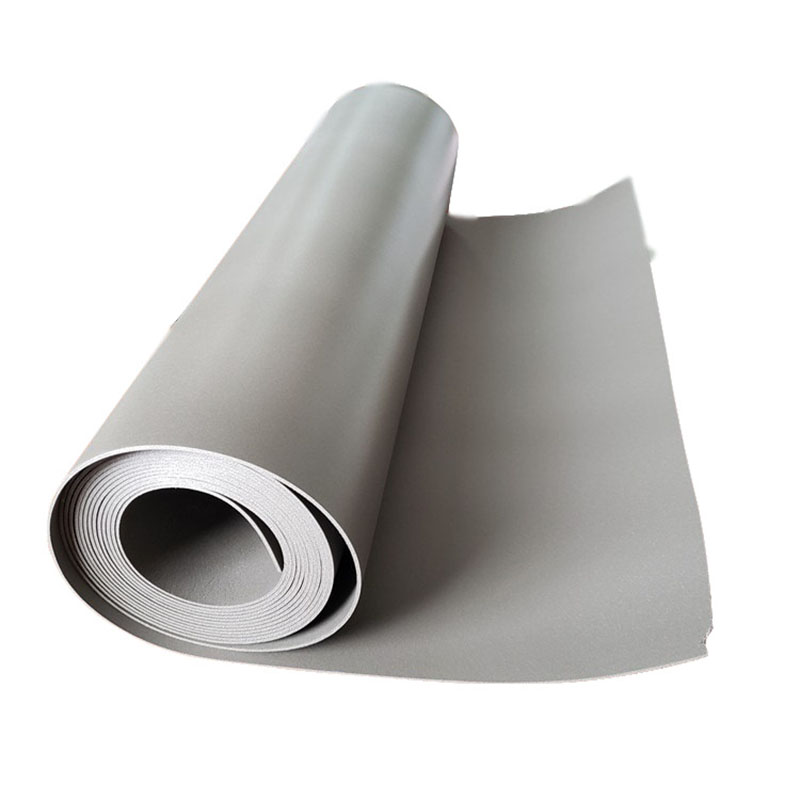
You must evaluate technical specifications rigorously before finalizing any purchase order. Failing to match material capabilities to system demands causes rapid degradation. The following four criteria define successful implementation.
You must calculate thickness accurately to stop condensation. Always evaluate the ambient temperature, relative humidity, and internal line temperature. Warmer, more humid environments demand thicker foam walls. Energy codes change frequently across different regions. Many jurisdictions now push heavily for R-8 and R-12 standards. Standard commercial jobs often require multiple layers to reach these aggressive thermal targets.
Safety certifications matter immensely in commercial buildings. You must pass strict local fire inspections. Follow this compliance checklist when reviewing technical data:
Verify a Class A fire rating for the specific product tier.
Demand ASTM E84 or UL 723 compliance documentation.
Ensure the Flame Spread Index (FSI) remains strictly under 25.
Confirm the Smoke Developed Index (SDI) stays below 50.
Check if the factory-applied facing shares the same fire ratings.
You must compare aluminum foil-faced sheets against plain alternatives. Plain variants work well for concealed, low-risk indoor piping. However, foil adds a crucial secondary vapor barrier. It stops microscopic moisture vapor transmission dead in its tracks. Additionally, the reflective surface repels external radiant heat. This keeps cold air ducts significantly cooler in hot ceiling plenums.
Standard cross-linked polymers feature specific thermal boundaries. You must verify these limits align with your peak operational cycles. Most high-quality options handle continuous temperatures from -40°F up to 200°F. Exceeding these thermal limits causes rapid failure. The foam will shrink, crack, or melt entirely. Always check the manufacturer specifications against your hottest discharge lines.
Air delivery systems and refrigerant loops present vastly different thermal challenges. You cannot apply a single, uniform strategy to both networks. They require tailored approaches to ensure optimal efficiency.
Large surface coverage requires specific material traits. You need excellent sheet flexibility to wrap cumbersome rectangular trunk lines. A premium HVAC duct insulation dramatically reduces costly air leaks. Contractors prefer products featuring pre-applied adhesive backing (PSA). This factory-applied glue cuts field labor hours drastically. Furthermore, the semi-rigid foam provides vital acoustic dampening properties. It absorbs annoying mechanical vibrations before they reach occupied office spaces.
Refrigerant lines constantly experience extreme temperature differentials. The condensation risk remains exceptionally high here. Super-chilled fluids travel through highly humid ambient air. You must wrap these copper pipes incredibly tightly. Exact sizing prevents dangerous internal air pockets. Total seam closure stops invisible moisture ingress entirely. Any small gap will draw in humid air, leading to destructive freezing and eventual pipe rupture.
Engineers historically relied on fibrous blankets and heavy rubbers. However, modern polymer science offers compelling upgrades. You need a clear understanding of how these choices compare in real-world scenarios.
Fiberglass notoriously holds trapped moisture like a sponge. Once wet, it sags and loses all insulating value. Conversely, PE resists water completely. Installers also despise handling itchy, hazardous fiberglass particles. A polyethylene foam sheet is non-fibrous and entirely safe to handle. It maintains excellent thermal consistency even in damp, poorly ventilated basements.
FEF bends very easily but carries a premium price tag. PE gives you a highly cost-effective, semi-rigid alternative. It boasts superior impact resistance for large, exposed ductwork. While FEF works beautifully for complex pipe joints, PE excels across broad, flat metallic surfaces. It delivers comparable moisture resistance at a noticeably friendlier price point.
Review the chart below to simplify your specification process. This matrix highlights when you should default to a specific thermal insulation material based on critical project variables.
Project Variable | Polyethylene (PE) Foam | Fiberglass (Glass Wool) | Flexible Elastomeric (FEF) |
|---|---|---|---|
Moisture Resistance | Excellent (Closed-cell) | Poor (Requires fragile jacket) | Excellent (Closed-cell) |
Impact Durability | High (Semi-rigid) | Low (Compresses easily) | Moderate (Soft, easily torn) |
Installer Safety | High (Non-itchy, no dust) | Low (Requires PPE) | High (Dust-free) |
Cost Profile | Moderate / Cost-Effective | Low (Base material only) | High / Premium |
Use the following bulleted checklist when making your final material decision:
Default to PE when protecting wide rectangular ducts in humid climates.
Select PE to eliminate health complaints from installers regarding itchy fibers.
Choose FEF only when navigating excessively tight, twisting residential pipe runs.
Avoid fiberglass completely in any unconditioned space prone to condensation.
Select aluminum-faced PE when aiming to reflect extreme attic heat away from ducts.
Even the finest materials fail if contractors install them poorly. Field conditions rarely match pristine laboratory testing environments. You must anticipate and mitigate these common implementation hazards.
Cheap pressure-sensitive adhesives (PSA) degrade surprisingly fast. High ambient heat and heavy humidity easily destroy weak chemical bonds. When the glue fails, the heavy foam sheets peel away from the ducting. This leaves bare metal exposed to the air. We strongly recommend specifiers verify exact adhesive temperature ratings before buying. Always choose high-tack acrylic adhesives over basic rubber options for demanding commercial environments.
Improper taping ruins the strongest vapor barrier. Thermal bridging happens at poorly sealed, exposed seams. Energy escapes rapidly through these microscopic gaps. Moisture actively hunts for these exact vulnerabilities. You must mandate the use of properly matching PE or aluminum tapes. Installers must apply firm, even pressure using specialized squeegees. This forces the adhesive into the microscopic pores of the foam.
Direct sunlight absolutely destroys unprotected polymer foams. Intense UV radiation aggressively breaks down the molecular chains. The material eventually turns brittle and crumbles into dust. You must acknowledge this chemical reality for outdoor installations. Always mandate UV-resistant jacketing. Specialized aluminum cladding protects exposed rooftop HVAC units beautifully. It shields the underlying thermal barrier from brutal solar radiation and aggressive bird damage.
Choosing the right mechanical covering requires careful strategic balance. You must weigh thermal performance alongside superior moisture resistance. Strict building code compliance remains a mandatory baseline, never an afterthought. Closed-cell polymer solutions clearly outperform legacy fibrous blankets in high-humidity applications. They protect your expensive machinery while lowering monthly utility expenditures consistently.
We advise procurement teams to always request official technical data sheets (TDS). You must verify third-party fire ratings independently. Furthermore, always calculate the initial material and labor costs together rather than just comparing basic unit prices. Factoring in reduced installation time often makes premium self-adhesive options surprisingly economical.
Your next step is straightforward. Contact a trusted manufacturer or a specialized industrial distributor today. Request physical material samples to evaluate the density yourself. Confirm your local municipal code requirements immediately to ensure your specific project specifications align perfectly with regulatory demands.
A: Yes, but only if equipped with a UV-resistant protective facing or robust metal jacketing. Bare PE foam degrades rapidly when exposed to prolonged, direct sunlight. The UV rays break down the polymer bonds. Applying a weatherproof aluminum cladding ensures long-term outdoor durability and maintains thermal efficiency.
A: To achieve high thermal ratings like R-12, PE foam must be adequately thick. While fiberglass generally achieves R-12 at a lower initial material cost, PE provides vastly superior moisture resistance. It performs perfectly without the need for a separate, highly fragile paper vapor barrier.
A: No. Because of its densely packed closed-cell structure, the material inherently acts as its own vapor retarder. When enhanced with an aluminum foil face and sealed correctly at the seams, it completely prevents destructive condensation on freezing refrigerant lines.
A: You should use a high-quality acrylic or rubber-based aluminum foil tape. Ensure the tape matches the specific facing of the underlying insulation. Always apply it to perfectly clean, dry surfaces. Installers must use proper mechanical pressure to prevent hidden air leaks.


