
Tel:
+86-551-6346-0808
Factory Add:
Plant 5-6, Zhongnan High Tech Industrial Park, Zhegao, Chaohu City, Anhui. 

Views: 0 Author: Site Editor Publish Time: 2025-10-05 Origin: Site
Polyethylene (PE) insulation is widely used for its thermal and moisture-resistant properties. But is it truly heat resistant? Understanding PE insulation's heat resistance is crucial for safe and effective usage. In this post, you'll learn about PE insulation's composition, applications, and factors affecting its heat resistance.
Polyethylene (PE) insulation is a type of thermal insulation material made from polyethylene, a widely used thermoplastic polymer. PE is composed of long chains of ethylene monomers, forming a lightweight, flexible, and moisture-resistant material. It often appears in the form of foam or sheets, providing excellent cushioning and thermal insulation.
The insulation typically consists of closed-cell PE foam, which traps air within its structure, enhancing its ability to reduce heat transfer. This closed-cell nature also makes it resistant to moisture absorption, preventing mold and degradation. PE insulation can be manufactured with various densities and thicknesses, depending on the application requirements.
PE insulation finds extensive use across multiple industries due to its versatility and cost-effectiveness:
Construction Industry: Used for insulating walls, floors, and roofs to improve energy efficiency. Its moisture resistance makes it ideal for damp environments. PE foam sheets are common for pipe insulation to prevent heat loss or gain.
Automotive and Transportation: PE foam cushions and insulates vehicle parts, reducing noise and vibration. It also protects components from temperature fluctuations.
Packaging: PE foam serves as a protective packaging material, cushioning fragile items during shipping and handling.
Sports and Leisure: Used in mats, padding, and protective gear due to its shock-absorbing properties.
HVAC Systems: Insulates ductwork and pipes to maintain temperature control and prevent condensation.
Its lightweight nature and ease of installation make PE insulation a popular choice for both residential and commercial applications.
Note: When selecting PE insulation, consider the specific density and any flame-retardant additives, as these factors influence its thermal and fire-resistant performance.
Polyethylene (PE) insulation offers decent thermal protection but its heat resistance depends on several factors. The polymer’s molecular structure, foam density, thickness, and additives all influence how well it withstands heat. For example, higher-density PE foam generally resists heat better than low-density variants because it contains fewer air pockets, which can act as weak points in thermal performance.
Temperature exposure duration also matters. PE insulation can tolerate moderate heat but prolonged exposure to high temperatures (above roughly 80°C to 100°C) may cause deformation or melting. This is because PE’s melting point ranges between 105°C and 130°C, depending on its specific type and processing. Additionally, UV exposure and environmental conditions can degrade its heat resistance over time.
Manufacturers often enhance heat resistance by adding flame retardants or chemical cross-linking agents during production. These additives improve thermal stability by slowing down melting and combustion processes. For instance, incorporating magnesium hydroxide as a flame retardant can raise the material’s resistance to heat and fire without compromising flexibility.
When comparing PE insulation to other common insulation materials, its heat resistance is moderate but not the highest. Materials like mineral wool, fiberglass, and ceramic fiber insulation can withstand much higher temperatures—often exceeding 500°C—making them suitable for high-heat applications.
In contrast, PE insulation excels in lightweight, moisture resistance, and ease of installation, but it is less suitable for environments with extreme heat. For example:
Mineral Wool: Can tolerate temperatures up to 1000°C, ideal for fireproofing.
Fiberglass: Resists heat up to about 540°C, commonly used in building insulation.
PE Foam: Melts around 105–130°C, better for thermal insulation in moderate temperature ranges.
PE insulation’s closed-cell structure traps air, providing effective thermal insulation under normal conditions but limits its use in high-temperature settings. It is best applied where heat exposure is controlled and temperatures rarely exceed its thermal limits, such as residential wall insulation or pipe coverings.
In summary, PE insulation provides good heat resistance for everyday applications but requires flame retardant additives or protective coatings to improve performance in fire-prone or higher-temperature environments.
Polyethylene (PE) insulation is widely used but is inherently flammable. Its chemical makeup, being a hydrocarbon polymer, means it can catch fire and burn readily when exposed to sufficient heat or flame. PE foam, especially the common closed-cell types, ignites quickly and can contribute to rapid fire spread if not treated properly. For example, standard PE foam insulation used in building interiors can ignite in seconds and release a significant amount of heat and smoke.
The flammability depends on factors like foam density, thickness, and environmental conditions. Lower density foams tend to burn faster due to greater air content, which supports combustion. Additionally, PE foam emits toxic gases when burning, posing health risks during fires. This is a critical concern in residential and commercial buildings where PE insulation is used.
International fire safety tests, such as the 45-degree flammability test and cone calorimetry, show that untreated PE foam has high heat release rates and flame spread potential. For instance, PE foam blocks used in interior wall coverings have been shown to ignite rapidly and burn intensely, with total heat release values exceeding flame-retardant standards by two to three times (example data from recent fire safety studies). This highlights the need for careful consideration of fire risks when using PE insulation.
To improve fire safety, manufacturers add flame retardant chemicals to PE insulation during production. These additives work by slowing down ignition, reducing flame spread, or forming a protective char layer that shields the material from heat. Common flame retardants include halogenated compounds, phosphorus-based chemicals, and mineral fillers like magnesium hydroxide.
Magnesium hydroxide is especially popular as it releases water vapor when heated, cooling the material and diluting flammable gases. It also helps form a protective barrier that limits oxygen access, suppressing combustion. Importantly, magnesium hydroxide-based flame retardants avoid toxic halogen emissions, making them more environmentally friendly.
Another method involves surface coatings or lamination with flame-retardant layers. For example, applying montmorillonite clay (MMT) coatings on PE foam surfaces significantly improves fire resistance. Studies show that PE foam blocks coated multiple times with MMT do not ignite even after prolonged exposure to flame sources in standard tests. This approach reduces fire hazards in applications like interior wall panels and insulation.
Chemical cross-linking during manufacturing can also enhance thermal stability and reduce flammability. Cross-linked PE foams maintain structural integrity better under heat and resist melting or dripping, which helps prevent fire spread.
In summary, flame retardant additives and treatments are essential for making PE insulation safer in fire-prone environments. Without these, PE insulation remains a significant fire risk due to its high flammability and heat release characteristics.
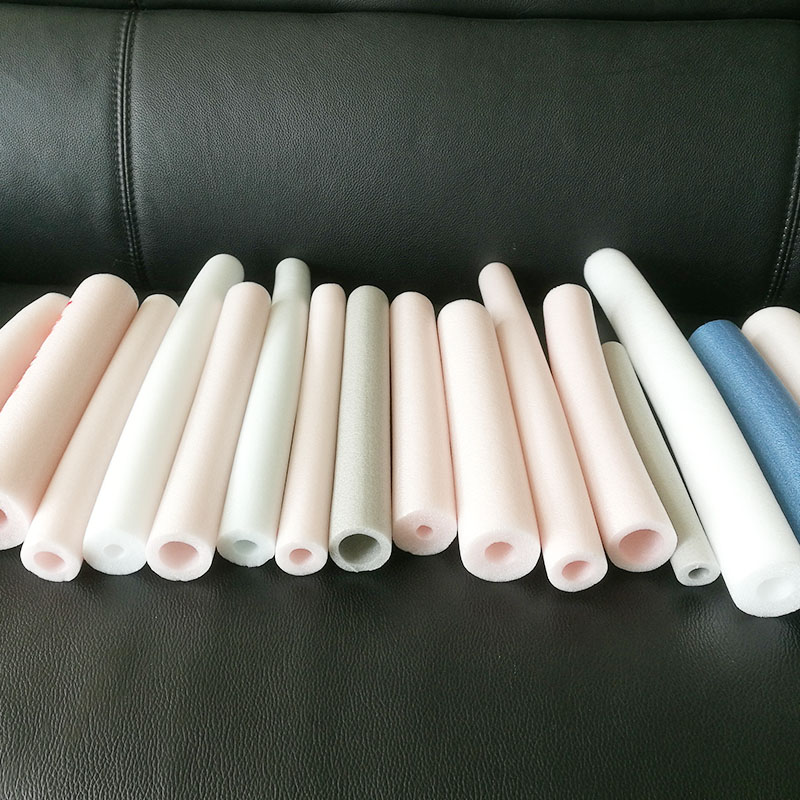
Polyethylene (PE) insulation is known for its low thermal conductivity, making it an effective thermal barrier. The closed-cell structure of PE foam traps air, which is a poor conductor of heat, significantly reducing heat transfer through conduction. Typically, PE foam insulation exhibits thermal conductivity values ranging from 0.03 to 0.04 W/m·K (watts per meter-kelvin), depending on its density and thickness. This range positions PE foam as a competitive thermal insulator compared to other common materials.
The insulation performance improves as the foam density increases because higher density reduces the size and number of air pockets, minimizing convective heat transfer inside the foam. However, beyond a certain density, the thermal conductivity may slightly increase due to the greater solid polymer content, which conducts heat better than air.
PE insulation performs well in a variety of environmental conditions, especially where moisture resistance is important. Its closed-cell foam structure prevents water absorption, preserving thermal performance even in humid or damp environments. This moisture resistance also helps avoid mold growth and material degradation, which can compromise insulation effectiveness.
In colder climates, PE insulation maintains its insulating properties without becoming brittle, offering reliable thermal protection. In warmer settings, it helps reduce heat gain, supporting energy efficiency in buildings and equipment.
However, PE insulation has limitations at very high temperatures. Extended exposure above 80°C to 100°C can degrade its structure, reducing thermal efficiency. Therefore, it is best suited for applications where temperatures remain within moderate ranges.
Furthermore, PE insulation is lightweight and flexible, making it easy to install in tight spaces or around irregular shapes. Its durability and resistance to chemicals and UV exposure contribute to long-lasting thermal performance in outdoor or industrial settings.
Polyethylene (PE) insulation is widely used across various industries due to its lightweight, moisture resistance, and thermal insulation properties. Here’s a closer look at how PE insulation serves different sectors:
In construction, PE insulation is popular for its thermal efficiency and moisture resistance. It is commonly used to insulate walls, floors, and roofs, helping reduce energy costs by maintaining indoor temperatures. PE foam sheets also insulate pipes, preventing heat loss or gain, which is crucial for plumbing and HVAC systems. Its closed-cell structure prevents water absorption, making it ideal for damp or humid environments like basements or exterior walls.
Moreover, PE insulation’s ease of installation and flexibility allow it to fit around irregular surfaces, making it suitable for retrofitting older buildings or new constructions. However, when used indoors, especially in areas prone to fire hazards, it’s important to select PE insulation with flame retardant additives or coatings to comply with fire safety regulations.
PE insulation plays a significant role in the automotive and transportation industries. It cushions components, reducing noise and vibration inside vehicles, which improves passenger comfort. It also insulates parts exposed to temperature changes, protecting sensitive electronics and mechanical systems.
The lightweight nature of PE foam helps reduce vehicle weight, contributing to better fuel efficiency. In buses, trains, and aircraft, PE insulation materials are used to enhance thermal comfort while meeting strict fire safety standards. Flame retardant versions of PE foam are often required to prevent fire hazards in these confined spaces.
PE foam is extensively used in packaging due to its excellent shock absorption and cushioning abilities. It protects fragile items during shipping and handling, reducing damage risk. Its moisture resistance helps keep products dry, preventing mold or corrosion during storage.
In addition to cushioning, PE foam insulation can maintain temperature-sensitive products, such as pharmaceuticals or food items, within safe temperature ranges during transport. This is especially important for cold chain logistics where thermal insulation prevents spoilage.
Polyethylene (PE) insulation, especially in foam form, is widely used but poses fire safety concerns due to its combustible nature. To manage these risks, international flammability standards exist to evaluate and classify materials based on their fire resistance and behavior during combustion.
One common method is the 45-degree flammability test, which measures how quickly and intensely a material burns when exposed to flame. PE foam insulation without flame retardants often fails this test, igniting rapidly and producing high heat and smoke. For example, typical PE foam blocks used indoors can ignite within seconds and release heat exceeding 11 MJ/m², which is about two to three times higher than flame-retardant wallpapers or general paper wallpapers (example data from recent studies). This high heat release rate (HRR) indicates a significant fire hazard.
Other tests include cone calorimetry, which assesses heat release rate and smoke production, and the spread-of-flame test, which measures flame propagation speed. PE insulation materials generally show rapid flame spread and high heat output unless treated with flame retardants.
International standards such as ISO 5660-1 (heat release rate) and ISO 5658 (flame spread) provide frameworks for testing insulation materials. Compliance with these standards ensures that PE insulation products meet minimum fire safety requirements suitable for their intended applications.
To improve fire safety, manufacturers add flame retardant additives like magnesium hydroxide or apply surface coatings such as montmorillonite (MMT) clay to PE foam. These treatments can significantly reduce flammability, delaying ignition and lowering heat release. For instance, PE foam coated multiple times with MMT showed no ignition under standard flame exposure tests, demonstrating excellent flame retardancy.
Certification bodies test treated PE insulation to verify compliance with fire safety standards. Products passing these tests receive certifications that confirm their suitability for use in buildings, vehicles, or other environments where fire risk is critical.
Regulations vary by country but often restrict the use of untreated PE foam in public buildings due to fire hazards. Some places allow untreated PE foam only in residential settings or require clear labeling and safety warnings. Therefore, verifying the certification and flame retardant status of PE insulation is essential before use.
Polyethylene (PE) insulation offers moderate heat resistance, influenced by factors like density and additives. It excels in lightweight, moisture resistance, and easy installation, but is less suitable for extreme heat compared to mineral wool or fiberglass. Flame retardants enhance its safety in fire-prone environments. For quality PE insulation, consider products from Lukwom. Their solutions provide effective thermal insulation, ensuring energy efficiency and safety compliance across industries.
Q: What is PE insulation made of?
A: PE insulation is made from polyethylene, a thermoplastic polymer composed of ethylene monomers. It often appears as foam or sheets for thermal insulation.
Q: How does PE insulation resist heat?
A: PE insulation resists heat through its closed-cell structure, which traps air and reduces heat transfer. Flame retardant additives can enhance its thermal stability.
Q: Why is PE insulation used in construction?
A: PE insulation is used in construction for its thermal efficiency, moisture resistance, and ease of installation. It helps improve energy efficiency in buildings.
Q: How does PE insulation compare to fiberglass?
A: PE insulation is lighter and more moisture-resistant than fiberglass but has lower heat resistance, making it less suitable for high-temperature applications.
Q: Can PE insulation melt under high temperatures?
A: Yes, PE insulation can melt if exposed to temperatures above 105°C to 130°C, depending on its type and additives.


