
Tel:
+86-551-6346-0808
Factory Add:
Plant 5-6, Zhongnan High Tech Industrial Park, Zhegao, Chaohu City, Anhui. 

Views: 0 Author: Site Editor Publish Time: 2025-10-12 Origin: Site
Insulation is crucial in construction, impacting energy efficiency and comfort. But what makes PE foam insulation stand out? Its unique characteristics offer solutions to common challenges. In this post, you'll learn about its uses, benefits, and innovative applications in various industries.
Polyethylene (PE) foam insulation stands out due to several key characteristics, making it a top choice in many industries. Let's explore these traits that contribute to its versatility and effectiveness.
PE foam features a closed-cell structure, meaning its tiny bubbles are completely sealed off from each other. This design prevents air and moisture from passing through, which:
Enhances thermal insulation by trapping air within cells.
Provides excellent resistance to water absorption.
Maintains shape and firmness under pressure.
This structure is a big reason why PE foam performs better than open-cell foams in damp or wet environments.
Thanks to its closed-cell design, PE foam is highly water-resistant. It does not absorb moisture, which helps prevent:
Mold and mildew growth.
Degradation caused by water exposure.
Loss of insulation efficiency over time.
This water resistance makes it ideal for applications like pipe insulation, building foundations, and outdoor uses where moisture is a concern.
PE foam resists many chemicals, including solvents, oils, and petroleum products. This trait means it can:
Withstand exposure to harsh substances without breaking down.
Be used in industrial settings where chemical contact is common.
Provide long-lasting protection in environments with potential spills or leaks.
Its chemical resistance also supports its use in packaging sensitive equipment that might be exposed to oils or chemicals.
Despite its strength, PE foam remains flexible and resilient. It can:
Return to its original shape after compression, offering excellent cushioning.
Bend and conform to irregular surfaces without cracking.
Provide shock absorption and vibration dampening.
This combination of durability and flexibility is why PE foam is popular in protective packaging, sports equipment, and construction materials.
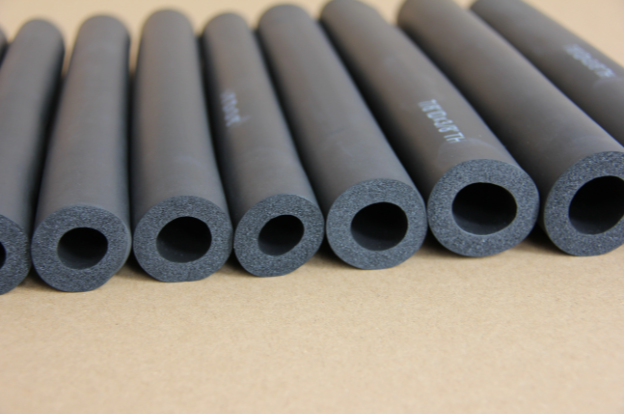
Polyethylene (PE) foam insulation is incredibly versatile, finding its way into many applications across industries. Its unique properties, like closed-cell structure and flexibility, make it suitable for a broad range of uses. Here, we explore some of the most common uses of PE foam insulation.
PE foam excels at thermal insulation because its closed-cell structure traps air, which slows heat transfer. This makes it ideal for:
Pipe insulation to prevent heat loss in plumbing and heating systems.
Insulating walls, floors, and ceilings in buildings to improve energy efficiency.
Refrigeration and cold storage insulation to maintain low temperatures.
HVAC systems, where it helps reduce energy consumption and maintain temperature control.
Its moisture resistance also prevents mold and mildew growth, which is crucial in maintaining insulation performance over time.
While PE foam is not as absorbent as open-cell foams, it still offers effective sound dampening. It reduces noise by absorbing vibrations and echoes, making it useful in:
Acoustic panels for offices, studios, and theaters.
Underlayments beneath flooring to minimize impact noise.
Automotive interiors to reduce road and engine noise.
Machinery enclosures where vibration dampening improves equipment life and reduces noise pollution.
Its durability and flexibility allow it to conform to irregular surfaces, enhancing its sound absorption efficiency.
PE foam is widely used in packaging because it cushions products against shocks and impacts during shipping. Its resilience allows it to:
Protect fragile items like electronics, glassware, and medical equipment.
Absorb vibrations, preventing damage from drops or rough handling.
Be custom-cut into inserts or wraps for tailored protection.
Offer lightweight packaging solutions, reducing shipping costs.
Its chemical resistance also protects sensitive products from oils or solvents.
Thanks to its buoyancy and water resistance, PE foam serves as a core material in many floatation devices, including:
Swimming pool noodles and kickboards.
Life vests and personal flotation devices.
Boat flotation blocks and buoyancy aids.
Water sports equipment like ski belts and floating docks.
Its ability to resist water absorption ensures it maintains buoyancy and durability even after prolonged exposure to water.
Tip: When selecting PE foam for your project, match the foam density and thickness to the specific use—higher density for packaging and flotation, moderate for insulation and sound absorption—to optimize performance and cost.
Polyethylene (PE) foam comes in several types, each designed to meet specific needs. Understanding these types helps you pick the right foam for your project, whether it’s insulation, packaging, or flotation.
Crosslinked polyethylene foam is made by creating strong bonds between polymer chains. This process gives the foam a tough, rigid structure. It resists moisture, gases, and chemicals better than other types. You’ll find it in gasketing, pipe insulation, and vibration damping.
There are two kinds of crosslinking:
Chemical Crosslinking: Uses chemicals and heat to create dense, strong foam. It’s durable but has a rougher surface.
Physical Crosslinking: Forms bonds naturally, resulting in a finer cell structure. This foam is more flexible and smoother.
XLPE foam can also be made fire retardant or static dissipative, adding extra safety and functionality.
Expanded polyethylene foam is made by heating and pressing beads of polyethylene. This creates a lightweight, beaded foam with a good strength-to-weight ratio. It’s soft but resilient, making it great for packaging and cushioning. EPE foam also offers decent thermal resistance and can be molded or die-cut to fit various shapes.
This foam type is recyclable, which is a plus for environmentally conscious projects.
Extruded polyethylene foam is produced by melting polyethylene resin and shaping it through a mold. Additives can be mixed in during this process to change the foam’s properties. The result is a foam that’s lightweight, durable, and has excellent insulation qualities.
It’s commonly used in construction for pipe insulation, sealing, and protective packaging. This foam is also easy to fabricate into sheets or custom shapes.
Low-density polyethylene foam has a more open cellular structure, making it softer and more compressible than other types. It's ideal for packaging delicate items because it cushions well without adding much weight.
LDPE foam is also buoyant and water-resistant, which makes it useful in marine applications like flotation devices. Its softness allows it to absorb shocks gently, protecting fragile goods during shipping.
Polyethylene (PE) foam insulation offers several advantages that make it popular across many industries. Its unique properties combine to provide cost savings, environmental benefits, and ease of use, making it a smart choice for both commercial and residential projects.
PE foam insulation is an economical option compared to many other insulation materials. Its durability and resistance to moisture mean fewer replacements or repairs over time, reducing long-term expenses. Additionally, its lightweight nature lowers shipping and handling costs, and its ease of fabrication cuts down labor time during installation. This combination of factors results in a cost-effective solution that delivers excellent performance without breaking the budget.
Using PE foam insulation can contribute positively to environmental sustainability. Many PE foams are recyclable, reducing landfill waste after their useful life. The material’s closed-cell structure enhances energy efficiency by providing superior thermal insulation, which lowers heating and cooling energy consumption in buildings. Some manufacturers also produce PE foam with eco-friendly additives or use processes that minimize harmful emissions. Choosing PE foam can thus support greener building practices and reduce your project's carbon footprint.
PE foam insulation is flexible, lightweight, and easy to cut or shape, making installation straightforward and less labor-intensive. It can be applied in sheets, rolls, or custom-cut pieces to fit various spaces, including irregular surfaces. Its water resistance eliminates the need for additional moisture barriers in many cases, simplifying the installation process. Moreover, PE foam’s resilience means it maintains its form and insulating properties even when compressed or bent, ensuring a reliable fit and long-lasting performance.
When selecting PE foam insulation, several key factors affect its performance and suitability for your project. Understanding these considerations helps ensure you get the best results for thermal protection, durability, and safety.
Density plays a crucial role in the foam’s strength, flexibility, and insulating ability. Higher density PE foam has thicker cell walls and smaller cells, making it firmer and more durable. It’s ideal for applications requiring strong cushioning or structural support, such as packaging heavy equipment or flotation devices.
Lower density foam is softer and more compressible, suitable for light cushioning or flexible insulation wraps. Thickness also influences insulation efficiency; thicker foam provides better thermal resistance and sound absorption but may add weight and cost.
Choose density and thickness based on your specific needs:
High density (above 3 lb/ft³): Stronger, better for impact protection, flotation, or heavy-duty insulation.
Medium density (1.7 to 3 lb/ft³): Balanced strength and flexibility, common in pipe insulation and general packaging.
Low density (below 1.7 lb/ft³): Lightweight, flexible, good for delicate packaging or soft insulation.
Fire safety is important, especially in building insulation or public spaces. Standard PE foam is combustible and may not meet fire codes in some applications. Fire retardant PE foam includes additives that reduce flammability and slow burning.
If your project requires fire resistance, verify that the foam meets relevant fire safety standards such as ASTM E84 or UL 94. Fire retardant foams may cost more but provide essential protection against fire hazards.
PE foam exposed to sunlight can degrade over time due to ultraviolet (UV) rays. UV exposure may cause discoloration, surface cracking, or loss of mechanical strength. For outdoor or sun-exposed applications, consider UV-resistant PE foam or protective coatings.
Covering foam with UV-blocking materials like fabric wraps or paints extends its lifespan. Some foams come pre-formulated with UV stabilizers to resist sun damage.
Polyethylene (PE) foam insulation is not only a staple in traditional uses like thermal insulation and packaging. Its unique properties also open doors to innovative applications across various industries. Let’s explore some of these exciting uses.
PE foam’s flexibility and shock-absorbing capabilities make it ideal for custom packaging. It can be cut, shaped, or laminated to create form-fitting inserts that protect delicate items during shipping. This customization ensures:
Maximum protection with minimal material use.
Reduced shipping costs due to lightweight cushioning.
Enhanced presentation for high-value products.
Companies often use PE foam to package electronics, medical devices, and fragile instruments. Its chemical resistance also shields products from oils and solvents during transport.
Aquaponics systems combine fish farming with plant cultivation, requiring stable temperatures and moisture control. PE foam insulation plays a vital role here by:
Providing thermal insulation to water tanks and grow beds.
Offering buoyancy for floating rafts supporting plants.
Resisting water absorption, preventing mold or decay in moist environments.
Its durability and resistance to chemicals make PE foam a practical choice for long-lasting aquaponic setups, helping maintain system efficiency and plant health.
In textiles, PE foam finds innovative uses as padding and support material. It’s employed in:
Shoulder pads, bra cups, and garment inserts for shape and comfort.
Protective layers in sportswear to absorb impact.
Cushioning in footwear manufacturing.
Its lightweight and flexible nature allows designers to enhance comfort without adding bulk. Moreover, PE foam’s resistance to moisture and mildew ensures textiles stay fresh and durable over time.
PE foam insulation offers versatility with its closed-cell structure, water resistance, and chemical durability. It finds applications in thermal insulation, sound absorption, and packaging. As insulation technology advances, PE foam's innovative uses in aquaponics and textiles are emerging. Lukwom provides high-quality PE foam insulation, ensuring energy efficiency and cost-effectiveness. With its unique benefits, Lukwom's products deliver exceptional value across industries, supporting sustainable practices and enhancing product protection.
Q: What is PE insulation?
A: PE insulation, or polyethylene foam insulation, is a closed-cell foam material used to prevent heat loss and provide moisture resistance in various applications like pipe insulation and building foundations.
Q: How is PE insulation used in construction?
A: PE insulation is used in construction to insulate walls, floors, and ceilings, improving energy efficiency and preventing mold growth due to its moisture-resistant properties.
Q: Why choose PE insulation over other types?
A: PE insulation offers superior water and chemical resistance, durability, and flexibility, making it ideal for damp environments and applications requiring long-lasting protection.
Q: What are the benefits of PE insulation?
A: Benefits of PE insulation include cost-effectiveness, environmental sustainability, ease of installation, and excellent thermal and sound insulation properties.
Q: How does PE insulation compare to other foam types?
A: Compared to other foam types, PE insulation is more water-resistant and durable, with a closed-cell structure that offers better thermal insulation and chemical resistance.
Q: Can PE insulation be used for soundproofing?
A: Yes, PE insulation can be used for soundproofing by absorbing vibrations and echoes, making it effective in acoustic panels, flooring underlayments, and machinery enclosures.
Q: Is PE insulation recyclable?
A: Many types of PE insulation are recyclable, contributing to environmental sustainability by reducing landfill waste after their useful life.


