
Tel:
+86-551-6346-0808
Factory Add:
Plant 5-6, Zhongnan High Tech Industrial Park, Zhegao, Chaohu City, Anhui. 

Views: 0 Author: Site Editor Publish Time: 2026-07-31 Origin: Site
Engineers constantly face a distinct challenge in constant-load systems. You must achieve precise, reliable refrigerant metering without inflating manufacturing expenses. Mechanical complexity often adds unnecessary failure points to otherwise simple systems. Fortunately, a passive, zero-moving-parts solution exists. The Capillary provides an elegant method for pressure reduction and evaporation management. It uses simple physics rather than electronic sensors to regulate thermodynamics. While its design appears incredibly simple, success is not guaranteed by default. Selecting the right component requires strict adherence to sizing tolerances. You must also verify material purity and understand application-specific limits. A microscopic deviation can easily ruin system efficiency. In this guide, you will learn how to properly specify and implement these crucial parts. We will explore sizing metrics, typical applications, and common implementation risks to ensure highly reliable system operation.
HVAC/R manufacturers need a fail-safe, budget-friendly method to drop refrigerant pressure. You must move refrigerant from the high-pressure condenser to the low-pressure evaporator efficiently. Mechanical valves add complexity and potential breakdown points. Instead, a finely tuned AC flow control device handles this seamlessly. It uses sheer physical restriction. The tube length and narrow inner diameter create massive friction. This friction, combined with rapid fluid acceleration, regulates flow based purely on system thermodynamics. It eliminates the need for mechanical or electronic sensors entirely.
What makes this component truly successful? It all comes down to one singular metric. You must achieve an exact pressure drop matching compressor capacity at a specific design condition. If the restriction is too great, the evaporator starves. If it is too low, liquid refrigerant floods the compressor. Engineers must hit the perfect balance to maximize cooling performance. Real-world applications demand exact mathematical precision here. A small miscalculation creates massive operational headaches later. You cannot adjust anything once the factory seals the system.
Mapping out proper usage is critical for system designers. You must know exactly where a refrigeration capillary excels and where it fails. These tubes are the definitive engineering choice for systems running predictable, constant thermal loads. We see them dominate residential and light commercial equipment globally. Manufacturers rely on them heavily for domestic refrigerators and deep freezers. You will also find them frequently in window air conditioners, split systems, and dehumidifiers. These units run on very steady, predictable cycles. The cooling load rarely experiences sudden or drastic spikes.
However, they have distinct industrial limitations. Engineers rarely use them in large commercial chillers. They are entirely absent from complex variable refrigerant flow (VRF) systems. Why? Because they lack the ability to adjust to rapid load shifts. When ambient temperatures fluctuate wildly, a fixed restriction cannot adapt. A supermarket display case facing shifting foot traffic needs dynamic modulation. Fixed tubes just cannot handle those variable demands effectively.
Let us compare initial component cost and manufacturing complexity against overall energy efficiency. A copper capillary tube easily wins on upfront cost. It requires absolutely zero mechanical calibration on the assembly line. Expansion valves (TXVs), however, win heavily on energy efficiency under variable loads. TXVs modulate flow dynamically as the temperature changes.
Here is a simplified comparison chart demonstrating these trade-offs:
| Evaluation Dimension | Copper Tube Setup | Expansion Valve (TXV) |
|---|---|---|
| Manufacturing Complexity | Extremely Low | Moderate to High |
| Variable Load Efficiency | Poor | Excellent |
| Moving Parts | None | Multiple (Diaphragm, Spring) |
| Compressor Requirement | Low-Starting-Torque | High-Starting-Torque |
System charge sensitivity remains a critical implementation reality. These basic systems require an exact, critical refrigerant charge during manufacturing. You cannot overcharge the unit safely under any circumstances. Excess refrigerant skips the evaporator entirely and floods the compressor directly. We must weigh this strict tolerance against a unique system advantage. These tubes allow system pressure to equalize completely during off-cycles. When the compressor shuts down, refrigerant slowly bleeds through the open tube. High and low sides equalize within minutes. This equalization enables the use of cost-effective, low-starting-torque compressors. This significantly lowers overall manufacturing overhead for small appliances.
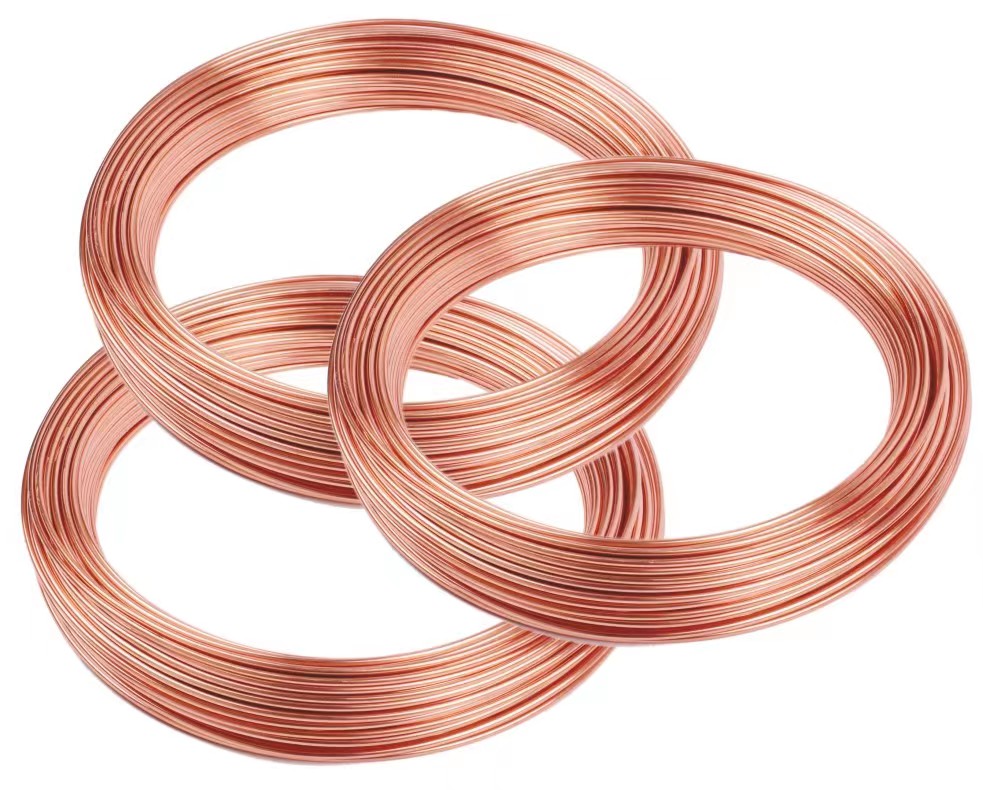
Engineers must source DHP (Deoxidized High Residual Phosphorus) copper exclusively. It is absolutely necessary to meet strict ASTM B360 standards. This authoritative standard dictates precise specifications for hard-drawn tubes in restrictor applications. It ensures the metal can withstand constant high pressures without rupturing. Sizing logic relies heavily on three primary physical variables. Inner diameter (ID), total tube length, and internal surface roughness dictate the final flow rate.
Consider these critical sizing principles:
Furthermore, internal cleanliness is completely paramount. You must emphasize strict internal cleanliness limits during procurement. Industry standards typically measure residual matter per square meter. If manufacturing oils or drawing waxes remain inside the micro-bore, disaster strikes quickly. These organic contaminants mix directly with synthetic refrigerants and compressor oils. They eventually solidify and cause severe system degradation or complete blockages. Cleanliness is not optional; it dictates system lifespan.
System designers must actively mitigate common field failures during the prototyping phase. Clogging remains the largest operational threat by far. You must install an inline liquid filter drier immediately upstream of the restriction point. It catches stray particulates and absorbs rogue moisture effectively. Without it, microscopic ice crystals or copper debris will eventually plug the micro-bore.
Vibration fatigue presents another serious, long-term risk. Compressors generate constant mechanical vibration during every single run cycle. Over time, this constant shaking causes severe work-hardening. Fracture at the brazed joints becomes highly likely. You must ensure proper physical coiling and incorporate smart vibration dampening techniques. Wrapping the tube around a larger suction line often absorbs this destructive energy.
Finally, improper installation causes immediate operational issues. Technicians and factory workers often make mistakes during silver brazing. Excessive filler metal easily flows inside the pipe due to capillary action. It partially obstructs the tiny inner passage. To avoid this, follow these numbered best practices:
Addressing these common mistakes prevents immediate flow restrictions on the assembly line.
Procurement managers must scrutinize suppliers heavily when auditing HVAC copper parts. Sourcing sub-par materials leads directly to massive recall campaigns. You need to evaluate the physical form factor based on your specific manufacturing line setup. Do you buy precut straight lengths or continuous pancake coils? Automated cutting machines typically handle pancake coils much better. They unroll and cut the material at high speeds. Straight lengths suit smaller, manual assembly stations where workers handle individual pieces.
Vendor validation requires incredibly strict criteria. You must demand documented flow-testing guarantees from your supplier. Check rigorously for batch-to-batch ID consistency. A microscopic variance across a single production batch ruins product reliability completely. Always verify the supplier's packaging standards before accepting deliveries. Good suppliers deliver tubes with properly sealed and nitrogen-purged ends. This vital step prevents internal oxidation before the factory installation occurs.
The simple bare tube remains an unbeatable flow control device. It perfectly serves specific, constant-load refrigeration and AC equipment across the globe. When engineered properly, it offers decades of flawless, passive performance. We strongly recommend engineers thoroughly cross-reference their required pressure drop calculations. Always use verified manufacturer flow charts for validation. Do not rely on guesswork or outdated nomographs from old textbooks. We urge procurement teams to request extensive sample testing before authorizing bulk orders. You must verify strict ID tolerances firsthand in your own laboratory. Taking these precise action steps ensures fail-safe system performance. It drastically reduces field warranty claims and elevates overall brand reputation.
A: A shorter tube drastically decreases system restriction. This leads to higher evaporator pressures and elevated temperatures. Consequently, you experience reduced cooling capacity. The compressor works harder to cool the space. More dangerously, the lack of restriction allows liquid refrigerant to bypass the evaporator completely. This causes liquid slugging at the compressor, which can destroy the mechanical valves instantly.
A: Yes, this is technically feasible and often performed as a system upgrade. However, it requires significant modifications. You must add a liquid receiver to manage fluctuating refrigerant volumes safely. Additionally, you will likely need to change the compressor. Standard setups use low-starting-torque compressors. A TXV prevents off-cycle pressure equalization, meaning the system now requires a high-starting-torque compressor to function correctly.
A: Technicians often attempt to clear clogs using high-pressure nitrogen flushing. While this sometimes forces the blockage out, it is rarely a permanent fix. Contaminants usually remain embedded in the tube walls. The most realistic, skeptical view is that full replacement is the only reliable option. In commercial applications, replacing the component entirely guarantees warranty-safe performance and prevents immediate repeat failures.
A: The physics of fluid dynamics dictates this strict requirement. Flow capacity varies with the 4.6th power of the internal diameter. Because the mathematical relationship is exponential, even a microscopic physical variance changes the cooling profile drastically. A diameter error of just a few thousandths of an inch can result in massive pressure drop deviations, entirely ruining system efficiency.


