
Tel:
+86-551-6346-0808
Factory Add:
Plant 5-6, Zhongnan High Tech Industrial Park, Zhegao, Chaohu City, Anhui. 

Views: 0 Author: Site Editor Publish Time: 2026-08-13 Origin: Site
Selecting the wrong foam insulation tube leads to condensation, energy bleed, and premature degradation. This mistake often costs significantly more in maintenance than your initial material savings. For HVAC, plumbing, and industrial piping, you generally choose between EPE, XPE, and IXPE. The right choice comes down to cellular structure and cross-linking technology.
All three materials utilize a polyethylene base. However, their distinct manufacturing processes dictate their thermal resistance, durability, and project return on investment. This guide breaks down the technical realities of pipe insulation. You will learn how to specify the exact material for your performance needs. We will explore how different cellular structures impact water vapor transmission. You will gain actionable insights to meet strict building compliance requirements.
EPE (Expanded Polyethylene): Non-cross-linked, cost-effective for short-term or low-demand applications, but highly susceptible to structural compression and thermal degradation over time.
XPE (Chemically Cross-Linked): The optimal middle-ground. The XPE insulation tube delivers robust closed-cell thermal performance, excellent moisture resistance, and high ROI for commercial HVAC and plumbing.
IXPE (Irradiated Cross-Linked): Premium grade with an ultra-fine cellular structure. Best for high-end aesthetic applications, precision automotive, or medical environments requiring strict tolerances.
Decision Driver: Upfront material costs must be weighed against lifespan requirements, fire-rating compliance, and long-term R-value retention.
Engineers classify polyethylene foams based on their molecular bonding processes. This underlying structure directly determines how the material behaves under physical stress. It also controls how well the foam resists temperature fluctuations.
Manufacturers create Expanded Polyethylene (EPE) using physical blowing agents. They typically inject butane gas into melted plastic. This causes the material to expand rapidly. The process forms an open or semi-closed cell structure. This structure severely limits performance in harsh environments. Moisture easily permeates the open cellular gaps. Furthermore, the material flattens quickly when squeezed. It lacks the internal molecular strength to bounce back from continuous pressure.
Chemical cross-linking transforms basic polyethylene into a highly durable matrix. Manufacturers add chemical agents during production. Heat triggers a reaction, forcing polymer chains to bond together. They form a continuous three-dimensional web. This creates a dense, completely closed-cell matrix. Consequently, a strong XPE foam tube effectively blocks water vapor transmission. It traps inert air securely inside the cells. This trapped air provides reliable, long-lasting insulation.
Irradiation cross-linking represents the most advanced production method. Facilities use large electron accelerators for this process. High-energy electron beams sweep across the extruded polymer sheet. This radiation alters the molecular structure without chemical additives. The result is an incredibly smooth surface finish. You get a highly uniform, micro-cellular structure in IXPE insulation. It offers much tighter thickness tolerances compared to standard chemical processes.
Selecting piping insulation requires analyzing specific physical properties. You must look beyond initial price tags. Evaluating thermal stability and moisture resistance ensures long-term system health.
Thermal resistance measures how well a material stops heat transfer. Cross-linked structures maintain their initial R-value over decades. Their tight, closed cells prevent trapped gases from escaping. EPE performs adequately on day one. However, it loses efficiency rapidly in demanding environments. Its weaker cells rupture under thermal expansion and contraction. Once cells break, heat escapes freely through the damaged material.
Pipe sweating causes massive damage in commercial buildings. Condensation leads directly to corrosion under insulation (CUI). CUI destroys expensive metal piping systems silently. Closed-cell variants block moisture intrinsically. They eliminate the need for secondary vapor barriers in standard environments. The dense molecular web stops water droplets from penetrating the foam core. This keeps the underlying metal pipes completely dry.
Contractors require materials capable of surviving rough handling. We evaluate tear strength and compression recovery. UV resistance also plays a role in exterior applications. IXPE provides the highest overall mechanical strength. It resists tearing even when pulled tightly around sharp corners. Still, XPE generally proves sufficient for ninety percent of concealed piping jobs.
Property | EPE Foam | XPE Foam | IXPE Foam |
|---|---|---|---|
Cell Structure | Open / Semi-Closed | Fully Closed | Micro-Closed |
Moisture Resistance | Low | High | Very High |
Compression Recovery | Poor | Good | Excellent |
Ideal Application | Temporary Packaging | Commercial HVAC | Cleanrooms / Medical |
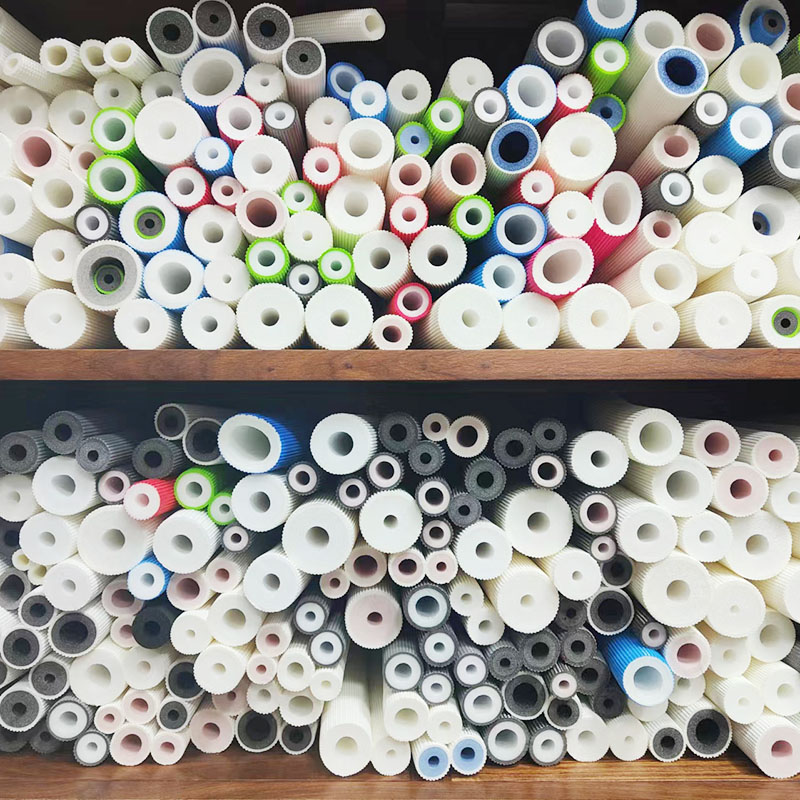
Building designs demand reliable performance without exorbitant spending. Facility managers need materials they can trust for decades. XPE perfectly bridges the gap between budget constraints and engineering requirements.
You must balance upfront expenditure against functional reliability. We frame XPE as the pragmatic choice for B2B procurement. It bridges the gap between competing technologies. EPE proves unreliable in harsh temperature conditions. Conversely, IXPE carries a premium price tag often unjustified for hidden pipes. The XPE Insulation Tube offers robust defense against thermal loss at a highly competitive price point.
Modern piping networks sometimes run across rooftops or outdoor exterior walls. Raw foam degrades when exposed directly to sunlight. Fortunately, XPE bonds easily with protective outer jackets. Manufacturers fuse aluminum foil directly onto the foam surface. This creates a high-performance multi-layer insulation tube. The foil reflects UV radiation and enhances fire retardancy for extreme environments.
Labor speed directly impacts overall project profitability. Workers need materials they can manipulate quickly. We evaluate handling characteristics during large commercial installs. XPE is flexible enough for complex pipe routing. Plumbers can bend it around tight elbow joints effortlessly. Yet, it remains rigid enough to prevent tearing when sliding over long pipe runs. This balance speeds up daily commercial installations dramatically.
Always seal longitudinal seams firmly using approved high-tack adhesive tapes.
Do not stretch the foam around sharp 90-degree corners; cut and miter the joints instead.
Wipe all copper or steel pipes clean before sliding the tubes over them.
Specifying the right foam depends entirely on the operating environment. A material highly rated for one sector might fail in another. You must match the cellular matrix to the specific environmental stress.
When to Specify EPE: Use EPE for temporary plumbing lines or protective packaging support. It works fine for low-stakes domestic water pipes. Specify it only where temperature differences are minimal. Budget serves as the primary driver for EPE selection. Do not use it for systems prone to heavy condensation.
When to Specify XPE: Deploy XPE for commercial VRF and VRV air conditioning systems. It dominates chilled water lines and standard solar water heating networks. General industrial piping relies heavily on XPE. It stops condensation on cold lines perfectly. It also retains heat effectively on hot water returns.
When to Specify IXPE: Choose IXPE for exposed architectural piping requiring a flawless visual aesthetic. Cleanroom environments mandate IXPE due to its low particle shedding. High-spec automotive OEM parts frequently utilize it. Specialized medical equipment insulation also demands the tight tolerances IXPE provides.
Building codes dictate strict parameters for construction materials. Insulation must meet rigorous safety and environmental thresholds. Ignoring these standards risks failed inspections and severe safety liabilities.
Building inspectors scrutinize fire ratings on all exposed insulation. We compare how materials behave under standardized flame testing. Common tests include UL 94 and ASTM E84. Bare polyethylene burns quickly. However, manufacturers integrate specialized flame retardants into XPE and IXPE matrices. These additives force the material to self-extinguish when the flame source is removed. They also significantly lower smoke toxicity levels during a fire event.
Indoor air quality certifications require low chemical outgassing. We carefully evaluate Volatile Organic Compound (VOC) emissions. IXPE stands out as the absolute cleanest option. It utilizes no chemical cross-linking agents during manufacturing. Therefore, it emits virtually zero odors. Still, modern XPE complies well with standard indoor air quality certifications. Manufacturers cure it properly to ensure off-gassing finishes long before installation.
Sustainability forces us to consider the environmental trade-offs. EPE is easily recyclable because its molecular chains remain separate. You can melt it down completely. Conversely, the cross-linked nature of XPE and IXPE makes them harder to recycle conventionally. The molecules behave more like thermoset plastics. However, they offer a significantly longer functional lifespan. This incredible durability drastically reduces replacement waste over the building's lifecycle.
Assuming all PE foam carries the same fire rating. Always check the specific manufacturer datasheet.
Using non-retardant foam in return-air plenums, which violates commercial fire codes.
Ignoring local municipal requirements for smoke density thresholds.
Choosing a reliable manufacturing partner ensures consistent material quality. Variations in foam density can ruin a large-scale piping project. You need vendors who provide transparent data and reliable tolerances.
Guide your procurement team to evaluate expected material longevity. Prioritize lifespan requirements over the initial unit price. Cheap foam degrades quickly under constant thermal cycling. You will face expensive labor costs when you inevitably replace degraded sections. Choosing a durable material ensures your piping remains protected for decades.
Never accept vague performance claims from suppliers. Warn your engineering team against manufacturers providing generic "R-values." They must specify exact testing conditions and ambient temperatures. Ask for the precise cross-linking density percentage. High-quality vendors publish third-party laboratory results for thermal conductivity and water vapor permeability. Scrutinize these sheets closely before signing purchase orders.
We strongly recommend asking vendors for exact-tolerance samples. You must test the physical fitment on your actual pipe dimensions. This proves especially critical if you are specifying a specialized EPE insulation tube for temporary usage. It is equally important when testing complex composite XPE solutions. Verify the foam's flexibility and tear resistance firsthand. Cut the samples open to inspect the uniformity of the cellular structure.
The choice between EPE, XPE, and IXPE requires a calculated approach. You must balance your immediate budget against structural integrity and application demands. Understanding the molecular differences empowers you to make informed engineering decisions. EPE handles short-term needs affordably. IXPE provides unmatched precision for sterile environments.
For the vast majority of commercial and industrial piping, the XPE tube offers the most verifiable return on investment. It expertly combines essential moisture barriers with long-term thermal stability. It withstands the rigors of commercial job sites effortlessly. Furthermore, it meets strict fire safety codes when properly formulated.
Consult your mechanical engineering team to review system specification sheets. Reach out directly to a trusted manufacturer for customized wall-thickness advice. Request composite foil recommendations tailored to your specific exterior environments.
A: Not recommended for critical lines. EPE’s lower density and weaker cell structure make it prone to compression and condensation over time. This structural weakness inevitably leads to energy loss. It also introduces severe risks of water damage from dripping condensation in commercial HVAC systems.
A: IXPE uses advanced electron-beam irradiation. This results in an exceptionally smooth surface, tighter thickness tolerances, and zero chemical residue. It proves superior for demanding aesthetic, medical, or highly restrictive clearance spaces. However, it does come at a higher initial price point.
A: Typically, a standard, uncovered XPE insulation tube is sufficient for standard indoor plumbing. Multi-layer structures, like those featuring aluminum foil facing, serve specific intense needs. Engineers usually reserve them for outdoor UV protection, severe industrial environments, or specialized areas requiring enhanced fire retardant ratings.


