
Tel:
+86-551-6346-0808
Factory Add:
Plant 5-6, Zhongnan High Tech Industrial Park, Zhegao, Chaohu City, Anhui. 

Views: 0 Author: Site Editor Publish Time: 2026-11-26 Origin: Site
Did you spend a fortune on a new central air conditioning system? Only to watch it underperform, leak, or break down prematurely? A faulty lineset installation is usually the culprit. It is a frustrating scenario. Yet, it happens every day in the field. Refrigerant lines are the vital veins of any HVAC system. They circulate the lifeblood making heat transfer possible. Proper setup ensures immediate cooling efficiency. It also guarantees the long-term mechanical longevity of your expensive equipment.
Whether you are a seasoned HVAC professional refining your craft or a homeowner overseeing a major residential upgrade, mastering material handling is absolutely crucial. Understanding how to properly route Insulated Copper Pipe For A/C prevents catastrophic failures. Today, we will explore the most frequent installation blunders. We will break down the thermodynamic consequences of these errors. Finally, we will discuss actionable strategies to avoid them entirely.
Material Matters: Utilizing substandard, thin-walled materials inevitably leads to premature mechanical failure. Always opt for proper refrigeration-grade linesets equipped with durable, multi-layered insulation.
Handle with Care: Aggressively kinking the metal or tearing the outer foam during bending severely restricts refrigerant flow. This triggers compressor burnout and massive condensation issues.
Seal Everything: Failing to hermetically seal joints and connection points invites moisture buildup. This oversight causes system inefficiency, internal corrosion, and potential structural water damage to the building.
Proper Sizing is Non-Negotiable: Installing the wrong diameter or wall thickness alters refrigerant velocity. This strains the compressor and ruins the overall Energy Efficiency Ratio of the unit.
Selecting a lineset with the incorrect diameter is a fundamental engineering error. Inadequate wall thickness is equally disastrous. HVAC systems are precisely calibrated. They require specific refrigerant volumes and velocities to function. Arbitrarily using the wrong pipe size directly sabotages the system's capacity to move heat.
Modern refrigerants operate at significantly higher pressures than legacy gases. During peak summer heatwaves, discharge pressures easily exceed 400 psi. Rushing a job and grabbing standard plumbing Type M copper instead of refrigeration-grade Air Conditioning and Refrigeration copper is a massive mistake. Thinner walls become highly susceptible to ballooning and bursting under such intense pressure.
The thermodynamic consequences are severe. An undersized suction line artificially increases refrigerant velocity. This induces a massive pressure drop. It throttles cooling capacity and forces the compressor to work overtime. Conversely, an oversized suction line drops refrigerant velocity too low. Heavy compressor oil cannot properly flow back to the outdoor unit. This eventually results in catastrophic mechanical seizure.
There is a substantial structural difference between standard utility pipes and premium HVAC materials. Superior pipes are manufactured to strict ASTM B280 standards. This ensures the metal is completely dehydrated and dead-soft annealed for workability. It remains structurally robust enough to handle high-pressure gas.
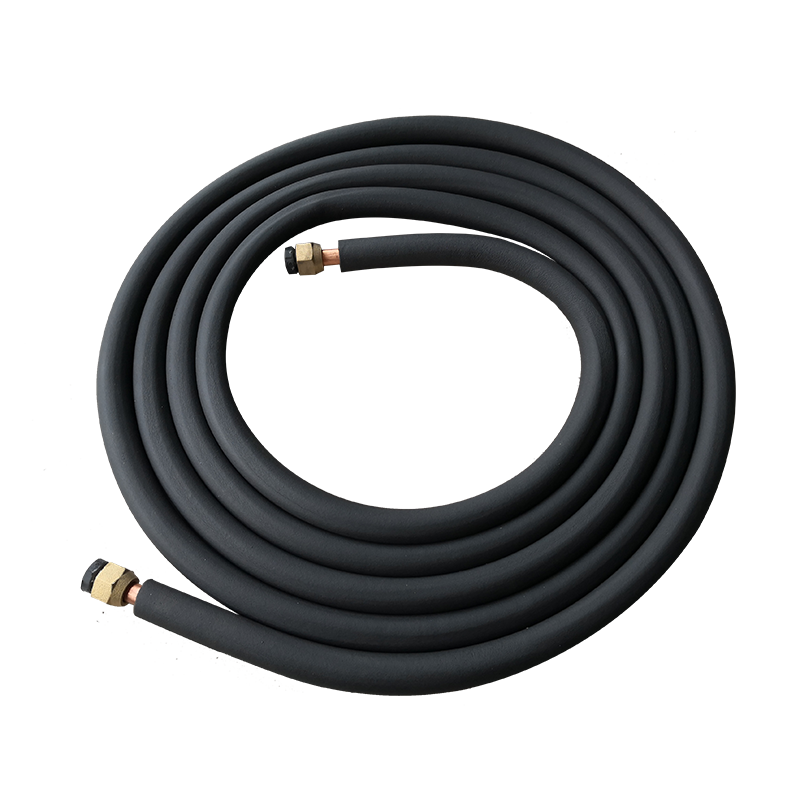
Top-tier linesets come pre-insulated with advanced materials. For instance, a robust 3-layer polyethylene insulation provides a tough outer shield. This resists tearing during rugged routing. It also offers vital UV protection, preventing the foam from baking and degrading under direct sunlight.
AC Capacity in Tons | Typical Liquid Line Outer Diameter | Typical Suction Line Outer Diameter | Required Copper Grade |
|---|---|---|---|
1.5 - 2.0 Tons | 3/8 inch | 5/8 inch | ACR ASTM B280 |
2.5 - 3.0 Tons | 3/8 inch | 3/4 inch | ACR ASTM B280 |
3.5 - 4.0 Tons | 3/8 inch | 7/8 inch | ACR ASTM B280 |
5.0 Tons | 3/8 inch | 1-1/8 inch | ACR ASTM B280 |
Picture an installer wedged into a sweltering attic. They try to muscle a 90-degree bend over a ceiling joist by hand. This aggressive, tool-free handling is a frequent and costly blunder. Without proper support, soft tubing will inevitably kink or collapse inward.
From a functional standpoint, a kink acts as an unintended metering device. It restricts the flow artificially. This causes a sudden and unwanted pressure drop. Inside the liquid line, this restriction causes the refrigerant to flash into a gas prematurely. Cooling performance dies instantly. In the suction line, a kink literally starves the compressor. It desperately needs cool refrigerant vapor to prevent its motor from overheating.
To preserve the internal diameter of the Insulated copper pipe, technicians must abandon brute force. Specialized mechanical pipe benders are mandatory. Ratchet benders or internal bending springs distribute the physical force evenly across the wall. The metal stretches smoothly rather than folding inward.
Every pipe diameter possesses a specific minimum bend radius. As a general engineering rule, the bend radius should be at least five times the outside diameter of the tubing. Forcing a tighter angle stresses the crystalline lattice of the metal. Microscopic fractures form. Under years of high-pressure pulsation, these blossom into highly destructive pinhole leaks.
The physical journey of routing the lineset is rarely gentle. Dragging lines through abrasive masonry holes or sharp steel studs is a recipe for disaster. Friction easily tears or entirely strips away the protective outer foam.
Consequently, the freezing suction line becomes exposed to warm, humid ambient air. The surface temperature of this line is typically well below the dew point. Condensation forms instantly. The exposed pipe will sweat profusely. If this happens inside a sealed wall cavity, the constant dripping rots structural wood. It ruins paint and cultivates toxic mold growth.
Compromised insulation also destroys thermal efficiency. The refrigerant absorbs unwanted ambient heat before reaching the compressor. This throws off calculated superheat values. Installers must use protective PVC sleeves or rubber grommets when passing through walls. Accidental snags require immediate repair using weather-resistant HVAC foam tape. Standard household duct tape loses its grip rapidly in damp conditions and should never be used.
Even if the main run remains flawlessly intact, vulnerabilities often emerge at connection points. A glaring oversight is leaving gaps where two separate pieces of insulation meet. Failing to wrap terminations near the service valves is equally damaging.
Insulation is engineered to act as an unbroken vapor barrier. When gaps are neglected, ambient air infiltrates the void. Moisture condenses directly onto the dark, hidden surface of the metal. Over years of operation, trapped moisture fosters severe oxidation. In environments with specific volatile organic compounds, it triggers formicary corrosion. This chemical reaction eats microscopic tunnels through the metal, resulting in slow, unrepairable leaks.
Every single joint must be hermetically sealed to guarantee longevity. Professionals brush high-quality contact adhesives onto the edges of the insulation tubes before pressing them together. Specialized elastomeric foam tapes are then wrapped tightly around brass terminations. This ensures an airtight, moisture-proof envelope.
When connecting the refrigerant lineset, technicians rely on either brazing or flaring. Both methods demand absolute precision. Sloppy execution during these critical phases is a leading cause of refrigerant loss.
For mini-split systems requiring flared connections, the most common blunder is improper torque. Over-tightening crushes the delicate flare. The metal thins until it cracks under pressure. Conversely, under-tightening fails to seat the flare flush against the brass fitting. High-pressure gas hisses out into the atmosphere. The solution is empirical. Always use a high-quality eccentric flaring tool. Secure the nut using a calibrated torque wrench set to the exact foot-pound specifications of the manufacturer.
Traditional central air systems rely heavily on brazed joints. The most insidious mistake here is failing to flow nitrogen through the lines while applying the torch. Heating the metal above 1100 degrees Fahrenheit in the presence of oxygen creates cupric oxide scale instantly. Once the compressor kicks on, refrigerant washes these black, abrasive soot flakes through the system. Debris inevitably clogs the microscopic screens of the Thermostatic Expansion Valve. Purging the lines with dry nitrogen at a low flow rate of 2 to 3 cubic feet per hour is a non-negotiable step.
Once perfectly routed and brazed, the lineset must be properly anchored. Many installers treat this final step as an afterthought. Spacing supports too far apart or using uninsulated metal strapping brutally crushes the foam.
Allowing lines to sag across long horizontal attic runs creates localized low points known as oil traps. As refrigerant vapor travels back to the condenser, its velocity drops in these sagging valleys. It fails to push the heavy polyolester oil uphill. Lubricant pools in drooping sections instead of returning to the compressor. The motor eventually seizes from excess friction.
Unsecured pipes are also highly susceptible to mechanical vibration. Compressors naturally generate pulsation. Loose pipes resting directly against wooden joists transfer annoying acoustic noise into the living space. The continuous friction will eventually wear a hole straight through the wall. Installers must use specialized cushion clamps at recommended intervals, usually every 4 to 6 feet. This keeps lines perfectly straight, properly sloped, and acoustically isolated.
The HVAC landscape is currently undergoing a massive regulatory and technological shift. Precise installation is more critical than ever before. With the nationwide rollout of stringent SEER2 efficiency standards, air conditioning systems are engineered with incredibly tight thermodynamic tolerances. Modern variable-speed compressors and smart-sensor arrays monitor refrigerant temperatures down to the decimal.
Simultaneously, the industry is phasing out high Global Warming Potential refrigerants. The shift favors mildly flammable A2L refrigerants like R-32 and R-454B. These advanced systems demand absolute lineset integrity. A minor kink causing a slight pressure drop quickly disrupts the calculated superheat. A poorly insulated run absorbing attic heat does the exact same thing. Modern smart-compressors will trigger safety lockouts immediately. This results in system downtime and expensive callback diagnostics. The margin for error installers once enjoyed has completely vanished. Flawless pipe handling and premium insulation are now mandatory baseline requirements.
The most detrimental mistake often occurs long before the technician arrives at the job site. In highly competitive contracting markets, there is a dangerous temptation to reduce overhead. Sourcing the cheapest, unbranded linesets guarantees long-term performance failures.
Subpar linesets feature paper-thin walls that barely pass minimum safety thresholds. This brittle material kinks easily. It is highly prone to cracking during the flaring process. On the exterior, cheap low-density foam lacks adequate UV inhibitors. Within just a few seasons of sun exposure, the foam bakes, becomes brittle, and disintegrates. Once the insulation fails, the compressor runs longer cycles, skyrocketing electricity bills.
The smartest solution is building on a foundation of reliability. Investing in High Quality Insulated Copper Pipe eliminates these risks. Trusted manufacturers offer custom, wholesale options equipped with robust 3-layer polyethylene insulation. This advanced shielding features an inner cross-linked foam for maximum thermal resistance. A structural middle layer and a tough outer jacket block UV degradation and resist tearing.
In addition, purchasing premium linesets in application-specific lengths like 3m, 4m, or 5m configurations drastically reduces the need for unnecessary field brazing. Fewer joints mean fewer potential leak points. Refusing to cut corners on material sourcing is the ultimate way to protect the investment and ensure decades of peak cooling performance.
Installing a central air conditioning system is a complex orchestration of thermodynamics, fluid mechanics, and precise craftsmanship. The long-term integrity of your refrigerant lineset is absolutely critical to the success of the entire project. Avoiding common pitfalls saves immense amounts of time, money, and unnecessary headaches. Proper sizing, careful bending, clean brazing, and airtight insulation sealing are the pillars of a professional job.
However, excellent installation techniques must rely on the best materials available. Ensure your next HVAC project operates flawlessly. Choose reliable, premium-grade insulated linesets designed for maximum durability and optimal thermal efficiency. If you are looking for materials that meet strict industry standards, explore the professional-grade options at lukwom.com to find the exact specifications your project demands. Proper installation, paired with top-tier materials, keeps your equipment running smoothly, quietly, and efficiently for many years to come.
Improper insulation causes the suction line to absorb ambient heat from the surrounding environment. This happens before the refrigerant reaches the compressor. The central air conditioning unit is forced to work significantly harder. This drastically reduces overall energy efficiency and drives up electricity bills. Uninsulated pipes will reach temperatures below the ambient dew point, causing severe condensation. Constant dripping leads to extensive water damage, drywall deterioration, and dangerous mold growth inside walls or ceilings.
No, standard plumbing copper is never acceptable for air conditioning applications. You must exclusively use refrigeration-grade ACR copper. ACR copper is dehydrated, nitrogen-charged, and sealed at the factory to prevent internal contamination. It is manufactured with specific wall thicknesses designed to safely handle the extreme pressures of modern refrigerants. Selecting a pipe with the wrong wall thickness will almost certainly lead to ruptures, severe leaks, and total system failure.
Torn insulation must be addressed immediately to prevent thermal bridging and condensation. For minor hairline tears, seal the gap using specialized weather-resistant HVAC foam tape or professional insulation adhesive. Standard duct tape degrades quickly and fails to provide an airtight seal. If a large section of foam is deeply compressed or shredded, carefully cut the damaged section away. Replace it with a new piece of high-quality closed-cell foam insulation of the exact same inner diameter and wall thickness. Seal the joining seams completely with proper adhesive.
Sweating is a basic thermodynamic reaction. It occurs when warm, humid ambient air comes into direct contact with a surface colder than the dew point. The suction line gets very cold in a properly functioning AC system. If your insulated pipe is sweating, it indicates a failure in the vapor barrier. A gap, tear, or crushed section is allowing humid air to reach the cold metal. To stop the sweating, locate the compromised area and restore the airtight seal using proper HVAC insulation materials.
When properly installed and protected from physical damage, high-quality refrigeration-grade copper can easily last 20 to 25 years. The lifespan of the surrounding insulation depends heavily on its material grade and environmental exposure. Premium 3-layer polyethylene insulation with UV resistance will maintain its thermal properties for decades. Conversely, cheap foam exposed to direct sunlight may degrade and crumble in less than five years.
Yes, refrigerant lines can be routed underground, but it requires specific protective measures. You cannot simply bury a standard insulated lineset in the dirt. Soil moisture and shifting ground will quickly destroy the foam and corrode the metal. The lineset must be encased within a sealed, waterproof PVC conduit. This protects the insulation from groundwater, prevents crushing from soil weight, and allows for easier replacement if future repairs are needed.


