
Tel:
+86-551-6346-0808
Factory Add:
Plant 5-6, Zhongnan High Tech Industrial Park, Zhegao, Chaohu City, Anhui. 

Views: 0 Author: Site Editor Publish Time: 2026-06-23 Origin: Site
The volatility of global copper prices has forced HVAC contractors, distributors, and facility managers to seek alternatives. Material costs heavily dictate project feasibility. This economic reality brings hybrid piping solutions into the spotlight. Standard copper has been the undisputed industry benchmark for decades. We rely on its proven performance and predictable lifespan. However, the integration of aluminum offers a compelling upfront cost reduction. Finding reliable material substitutions remains critical for modern construction and competitive bidding.
This guide provides an objective, evidence-based comparison between hybrid materials and traditional setups. You will learn how to evaluate material options effectively. We explore thermal dynamics, installation risks, and environmental vulnerabilities. Our analysis helps you select the right components confidently. You can match the ideal tubing to your specific project budget. You will also understand the exact longevity requirements and installation capabilities needed for successful deployment.
Material Reality: Copper aluminum pipes (typically aluminum tubing with factory-welded copper ends) offer significant upfront material savings but introduce specific installation and handling constraints.
Performance Gap: Full copper pipe remains superior in thermal conductivity, burst pressure, and resistance to galvanic corrosion.
Installation Nuances: Hybrid pipes require stricter handling to prevent kinking and specialized knowledge to avoid joint fatigue, whereas full copper fits standard field practices.
Decision Matrix: The choice hinges on the application environment—full copper is non-negotiable for coastal or high-vibration applications, while copper-aluminum serves as a viable cost-saving HVAC pipe in budget-sensitive, climate-controlled residential builds.
The HVAC industry faces intense pressure to optimize material expenses. Rising commodity markets drive these aggressive procurement challenges. Contractors constantly look for ways to reduce Bill of Materials (BOM) costs. You cannot simply compromise system integrity for cheaper parts. Every component must handle high refrigerant pressures reliably. Every joint must remain completely sealed against leaks. The industry demands innovative ways to lower expenses while maintaining safe operating standards.
This necessity popularized the modern hybrid design. We define a standard Copper Aluminum Pipe as a composite structure. Manufacturers take an extruded aluminum main tube. They use advanced butt-welding techniques to attach short copper stubs to both ends. This design allows technicians to use standard brazing or flaring tools in the field. It bypasses the complex requirements of directly welding aluminum during installation.
Conversely, traditional installations rely exclusively on pure ACR-grade copper. The industry trusts this standard material implicitly. Its inherent malleability makes it highly forgiving during installation. The metal provides standardized pressure ratings across all major jurisdictions. It remains entirely inert to modern refrigerants and compressor oils. A standard full copper pipe sets the ultimate baseline for overall system reliability.
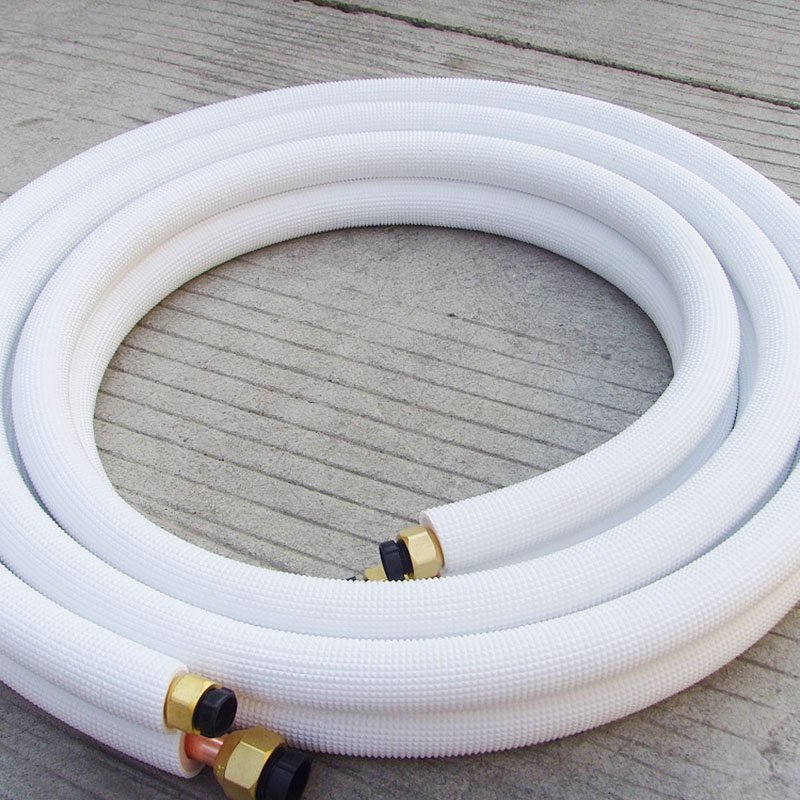
Heat transfer rates define system efficiency. Pure copper delivers the undisputed benchmark for thermal conductivity. It transfers thermal energy at roughly 385 W/m·K. Standard sizing aligns perfectly with OEM compressor specifications. This ensures optimal superheat and subcooling values. The refrigerant cycle operates exactly as designed. You get maximum efficiency from your cooling equipment.
A hybrid line presents a slightly different thermal profile. Aluminum conducts heat at approximately 205 W/m·K. It possesses a lower thermal conductivity than pure copper. This sounds alarming on paper. However, the difference remains practically negligible in standard residential setups. A typical copper aluminum AC pipe performs adequately over short distances. Proper exterior insulation plays a much larger role in maintaining line temperature than the internal core metal.
Property | Pure Copper (ACR Grade) | Pure Aluminum |
|---|---|---|
Thermal Conductivity | ~385 W/m·K | ~205 W/m·K |
Density | 8.96 g/cm³ | 2.70 g/cm³ |
Galvanic Reactivity | Low (Cathodic) | High (Anodic) |
Field Malleability | Excellent | Moderate (Work-hardens fast) |
Environmental resistance separates premium materials from budget options. Pure copper provides exceptional durability against the elements. It naturally forms a protective oxide patina over its surface. This patina prevents deeper structural degradation. You can typically expect a 20+ year lifespan from quality copper. It withstands sun, rain, and minor physical impacts effortlessly.
Hybrid structures introduce significant corrosion risks. The dissimilar metal weld point creates a prime environment for galvanic corrosion. Aluminum acts as an anode while copper acts as a cathode. If moisture or electrolytes contact the bare joint, the aluminum corrodes rapidly. You must protect this weld point religiously. Furthermore, aluminum remains highly susceptible to pitting corrosion. Coastal environments and highly polluted industrial areas accelerate this destructive process.
Field routing tests the physical limits of any tubing. Pure copper is extremely forgiving during complex installations. Standard tube benders work predictably. The metal yields smoothly without sudden structural failures. It also boasts a high tolerance for continuous vibration fatigue. You can route lines securely without fearing imminent stress fractures.
Aluminum requires a much gentler approach. The metal work-hardens faster when bent. Bending the same section twice often leads to snapping. You face a higher risk of kinking during tight directional changes. Installers must handle the tubing carefully to avoid creating micro-fractures. High-vibration environments demand extra attention. Proximity to the compressor shakes the line continuously. These vibrations easily crack poorly secured aluminum sections.
Material procurement heavily favors hybrid lines. You evaluate an immediate 30-40% cost reduction when sourcing hybrid components. This upfront discount looks incredibly attractive on large-scale bids. A reliable cost-saving HVAC pipe helps contractors win strict residential tenders. The initial numbers always validate the substitution.
However, you must factor in potential increases in labor time. Technicians spend more time routing hybrid lines safely. You cannot rush the installation process. Pulling aluminum-cored lines through tight conduits requires extra care. A single rough pull can kink the entire run. Furthermore, mandatory pressure testing protocols demand longer observation periods. These labor extensions slowly eat into the initial material savings.
Micro-leaks introduce hidden expenses to your balance sheet. The delicate nature of hybrid welds increases long-term failure probabilities. A single callback to repair a leaked joint destroys your profit margin. Replacing lost refrigerant like R-410A or R-32 is exceptionally expensive. Environmental regulations continue to drive refrigerant prices upward. You also face reputational damage from system failures.
Warranty handling complicates the financial picture further. You must compare how Original Equipment Manufacturers (OEMs) treat hybrid line sets. Many premium compressor warranties mandate pure copper lines. Using an alternative material sometimes voids the manufacturer coverage. You shift the financial liability directly onto your own business. Replacing a burned-out compressor out-of-pocket instantly wipes out any initial savings achieved during installation.
Success with hybrid materials requires strict adherence to specific field practices. You cannot treat an aluminum-cored line exactly like a pure copper line. Technicians must adapt their approach to mitigate unique material risks. We recommend following these critical safety steps during every installation.
Moisture Sealing: You must apply heavy, waterproof insulation over the copper-to-aluminum weld joints. Condensation frequently forms on active refrigerant lines. This water acts as an electrolyte. Proper sealing is a critical requirement to prevent galvanic corrosion at the factory joint.
Flaring Procedures: The copper stubs allow technicians to use standard flaring tools. Ensure your flaring block clamps securely on the copper portion only. Never let the clamping force reach the delicate factory weld.
Brazing Restraints: You must use heavy heat sinks when brazing near the factory weld. Copper transfers heat aggressively. This heat travels straight to the factory joint. The intense temperature easily melts the aluminum or destroys the weld integrity. Use wet rags or commercial heat blocking putties.
Vibration Isolation: Secure the lines firmly using rubber-lined clamps. Prevent the tubing from shaking. Residential static installs generally experience mild vibrations. Mobile or automotive AC challenges involve severe, continuous shaking. You must isolate the tubing to prevent work-hardening and inevitable fatigue fractures.
Every HVAC project presents unique demands. You must weigh the environmental risks against your available budget. Neither material solves every problem perfectly. Selecting the optimal tubing requires a clear understanding of the installation site. Use this framework to align your material choices with project realities.
Coastal Properties: Salt air destroys aluminum rapidly. High-humidity regions demand pure copper.
Commercial VRF/VRV Systems: Long pipe runs handle high operating pressures. Standard copper provides the necessary burst strength.
Premium Residential Builds: Clients prioritizing zero-maintenance longevity expect standard materials.
High Vibration Environments: Rooftop commercial units or industrial setups require materials with high fatigue resistance.
Budget-Capped Developments: Large-scale, entry-level residential tracts benefit from reduced initial costs.
Dry, Inland Climates: Areas with low ambient moisture present negligible galvanic corrosion risks.
Shorter Line Runs: Simple, straight routing avoids the need for complex bending and reduces kinking risks.
Temporary Structures: Units with a shorter intended lifecycle match the reduced lifespan expectations of a hybrid AC connection line.
Project Scenario | Recommended Material | Primary Justification |
|---|---|---|
Beachfront Condo HVAC | Full Copper | Extreme salt air corrosion resistance needed. |
Tract Home (Inland Desert) | Copper-Aluminum | Low moisture environment maximizes cost savings. |
Commercial Server Room | Full Copper | Zero-tolerance for leaks or downtime. |
Temporary Office Trailer | Copper-Aluminum | Short system lifecycle aligns with budget constraints. |
Navigating modern HVAC installations requires a balanced approach to material selection. Neither material is universally bad or fundamentally flawed. Substituting full copper with a copper-aluminum hybrid simply changes your risk profile. You shift the cost burden from initial material procurement to long-term risk management. Immediate savings require flawless installation execution and strict environmental control.
We advise contractors, distributors, and specifiers to evaluate specific environmental risks carefully. You must assess your technician skill levels before transitioning to alternative materials. Ensure your team understands the specific brazing restraints and moisture sealing requirements. Prioritize pure copper for high-stakes, corrosive, or high-vibration environments. Choose hybrid solutions selectively for controlled, budget-conscious residential applications. Proper alignment between material capabilities and project demands ensures profitable, long-lasting installations.
A: Yes, because the ends are typically copper stubs. Technicians can use standard flaring blocks and cones. However, extreme care must be taken not to stress the factory weld. You must clamp only the copper section and avoid applying torsional strain to the aluminum core.
A: Not inherently, but they demand precise handling. They are more susceptible to kinking during installation and galvanic corrosion over time. These issues are the primary causes of leaks in hybrid setups. Proper waterproof insulation and careful bending techniques mitigate these risks significantly.
A: In typical residential line set lengths, the efficiency difference is statistically insignificant. Aluminum has a lower thermal conductivity than pure copper. However, proper exterior foam insulation matters much more than the pipe core material. The system will maintain intended superheat values effectively.


