
Tel:
+86-551-6346-0808
Factory Add:
Plant 5-6, Zhongnan High Tech Industrial Park, Zhegao, Chaohu City, Anhui. 

Views: 0 Author: Site Editor Publish Time: 2026-07-01 Origin: Site
Selecting a vital component often feels routine until a catastrophic failure occurs. A single faulty component easily triggers severe compressor failure. It causes expensive refrigerant leaks and invites hefty EPA compliance penalties. Reactive repairs quickly drain maintenance budgets and disrupt facility cooling operations. You must shift your strategy from reactive fixes to proactive procurement. This requires adopting an objective, engineering-focused framework to evaluate components effectively.
This guide empowers facility managers, procurement officers, and lead technicians. You will learn how to evaluate materials, assess mechanical designs, and anticipate implementation risks. We walk you through specific pressure ratings and the nuances of connection architectures. By understanding these critical dimensions, you can make a confident purchasing decision. It ensures long-term system stability and keeps your infrastructure running smoothly.
We often encounter the classic "cheap part, expensive failure" paradigm in commercial cooling. Procurement teams sometimes save a few dollars upfront on generic components. However, installing a weak AC service valve almost always results in severe downstream expenses. A low-quality component compromises the integrity of your entire cooling infrastructure. Micro-leaks develop quietly. You lose efficiency before a catastrophic breakdown forces an emergency shutdown.
Refrigerant loss carries massive financial and legal penalties. Replacing lost refrigerant drains operational budgets rapidly. Prices for modern high-pressure refrigerants continue to climb. Furthermore, you face strict regulatory risks. EPA Section 608 establishes clear leak-rate thresholds for commercial refrigeration. If a faulty valve causes your system to exceed these thresholds, you face mandatory repair timelines. Failure to comply triggers aggressive audits and substantial fines. Your business cannot afford to ignore these compliance mandates. Reliable components act as your primary safeguard against regulatory action.
Component failures severely interrupt facility operations. Emergency maintenance truck rolls cost hundreds of dollars per hour. You pay premium labor rates for sudden diagnostic visits. Meanwhile, your facility loses essential cooling. Spiking indoor temperatures ruin perishable inventory. Uncomfortable tenants complain. Productivity drops instantly. You can quantify these losses easily. An unexpected shutdown costs exponentially more than premium parts. Proactive procurement eliminates these unpredictable disruptions entirely.
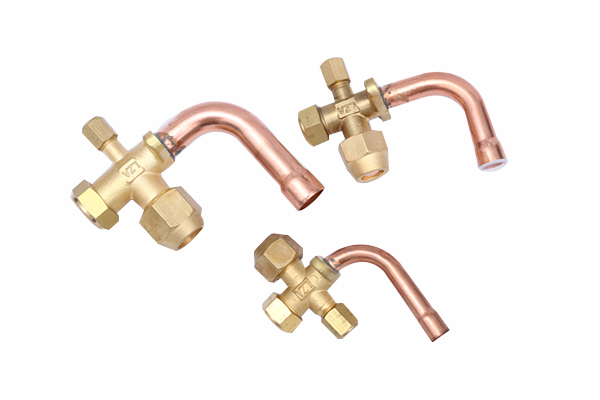
Modern cooling circuits demand precise flow control. Engineers design different components for specific operational zones. You must understand these categories to specify the correct part. Each category serves a distinct functional purpose.
These components fulfill a crucial maintenance role. They isolate the compressor entirely. Technicians perform essential repairs without recovering the entire system charge. This capability saves hours of labor. You avoid handling large volumes of expensive refrigerant. These units operate through specific mechanical configurations:
Technicians rely on these components daily. They provide localized diagnostic and charging ports. A standard access valve allows rapid connection for manifold gauges. We see several common variations in the field.
These units offer rapid control. They provide quick, quarter-turn flow isolation. Technicians shut off distinct system zones instantly. They require minimal physical effort to operate under pressure.
You find them most useful in specific scenarios. Long line sets benefit immensely from sectional isolation. Modular commercial refrigeration systems rely on them for zone management. If one evaporator loop fails, you isolate it. The rest of your facility continues cooling without interruption.
Evaluating physical components requires strict technical criteria. You cannot rely on visual inspection alone. Engineering specifications dictate field performance. We prioritize three core dimensions when shortlisting options for industrial environments.
Material density defines long-term reliability. We consider a forged brass valve the absolute industry standard for commercial HVAC/R applications. Manufacturers press hot brass into precision molds. This forging process aligns the grain structure of the metal.
Forged brass outperforms cast alloys dramatically. Cast metals contain microscopic air pockets. These voids create structural weaknesses. High-pressure refrigerants eventually force their way through porous cast metals. Forged brass offers superior density. It delivers exceptional vibration tolerance. Compressors generate intense mechanical shaking. Forged bodies resist this continuous stress. They also manage thermal expansion better during extreme temperature shifts.
Modern systems push extreme pressures. You must evaluate the maximum working pressure (MWP) of every component. A valve designed for legacy systems will fail on modern equipment. High-pressure refrigerants like R-410A and R-32 operate at significantly higher baseline pressures than legacy R-22.
Internal synthetic seals demand equal attention. O-rings and Teflon seats must survive harsh chemical environments. Modern systems use synthetic POE (polyolester) and PVE (polyvinyl ether) oils. These lubricants act as powerful solvents. They degrade incompatible rubber seals quickly. You must verify chemical compatibility before installation.
| Refrigerant Pressure Profile Comparison | ||
|---|---|---|
| Refrigerant Type | Typical System Condition | Average Liquid Line Pressure (psig) |
| Legacy R-22 | Standard Summer Cooling | ~220 - 260 psig |
| Modern R-410A | Standard Summer Cooling | ~350 - 420 psig |
| Next-Gen R-32 | Standard Summer Cooling | ~360 - 430 psig |
Piping connections dictate installation security. You choose between sweat (brazed) connections and flare connections. Sweat connections offer a permanent bond. They carry a much lower leak risk over decades of service. However, they require careful torch work.
Flare connections remain highly serviceable. Technicians replace them without open flames. However, they possess a higher sensitivity to torque errors. Evaluating port access angles also matters deeply. Technicians often work in confined spaces. Poorly angled service ports force awkward tool placements. This leads to stripped threads and poor vacuum seals.
Premium parts fail if installed incorrectly. Field realities often diverge from laboratory testing. You must protect internal mechanics during the installation phase. We see three common installation risks cause premature failures.
Brazing generates intense localized heat. This heat transfers down the copper pipe rapidly. It reaches the valve body within seconds. You must execute a critical requirement before applying a torch. Technicians must remove Schrader cores entirely. Leaving them inside melts the delicate internal seals instantly.
We highly recommend using heat-sink pastes. Wrapping the brass base in wet rags also dissipates thermal energy. Melted Teflon seats ruin the component before it ever sees active service. Preventing thermal damage ensures a perfect factory seal remains intact.
Mechanics often rely purely on muscle memory. This habit creates massive risks for flare fittings. Over-tightening flare nuts causes severe thread galling. The brass threads deform and crush together. This deformation creates microscopic gaps. Micro-leaks develop slowly as temperature fluctuations expand and contract the metal. Technicians must use a calibrated torque wrench. Adhering to manufacturer torque specifications eliminates thread destruction entirely.
Many technicians misunderstand the sealing mechanics. They believe the internal valve core stops all leaks. This assumption causes countless service callbacks. The brass cap serves as the primary leak seal. It features a high-quality O-ring seated inside.
The internal core acts merely as a secondary barrier. It stops gross leakage when hoses disconnect. If you leave the brass cap loose, refrigerant slowly escapes past the core. Emphasize tightening the cap firmly. Ensure the O-ring remains present and undamaged.
| Diagnostic Chart: Common Installation Failures | |
|---|---|
| Immediate Leaking Post-Brazing | Failure to remove internal core. Heat melted the synthetic O-rings and Teflon seats. |
| Slow Micro-Leak at Flare Nut | Over-torqued fitting caused thread galling, destroying the brass-to-brass mating surface. |
| Persistent Leak from Service Port | Missing primary brass cap or degraded internal cap O-ring. Core alone cannot hold pressure. |
Transitioning from technical evaluation to purchasing requires a systematic approach. You cannot browse catalogs blindly. Establish strict criteria for your supply chain. We recommend focusing on vendor vetting and operational standardization.
Evaluate suppliers rigorously. Ask for detailed batch testing records. A reliable manufacturer provides transparency regarding their defect rates. You need assurances of quality control. Verify their adherence to industry standards. Look for UL certifications and compliance with ASHRAE guidelines. A vendor who refuses to share tolerance data hides poor manufacturing practices.
Facility managers gain massive operational benefits through inventory standardization. Commit to a single, high-tier brand for all your refrigeration maintenance parts. Mixing brands creates tooling conflicts. Threads might fit poorly. standardization ensures tool compatibility across your entire facility. It creates predictable technician workflows. Muscle memory improves when technicians handle the same premium components daily. Installation errors drop significantly.
Do not initiate a massive fleet-wide rollout immediately. Protect your investment through staged implementation. Request technical spec sheets and comprehensive material data from your shortlisted vendors. Order a small test batch of parts. Run a pilot installation on a non-critical cooling circuit. Monitor the connections for several weeks. Verify the torque feel and brazing characteristics. Proceed with bulk procurement only after the pilot validates field performance.
Your cooling infrastructure relies on seemingly small components to maintain massive internal pressures. The right A/C Service Valve acts as your definitive first line of defense. It prevents systemic inefficiency and stops hazardous refrigerant loss before it starts. Cheap alternatives eventually drain maintenance budgets through emergency repairs and regulatory fines.
We encourage buyers to prioritize lifecycle value over initial unit cost. Focusing on forged brass construction ensures long-term vibration resistance. Matching precise pressure ratings to modern refrigerants guarantees operational stability. Take these action-oriented steps today:
A: Isolation valves physically block refrigerant flow. Technicians use them to separate main system components, allowing safe compressor maintenance without recovering the entire charge. Conversely, an access valve does not block system flow. It simply provides a localized port. Technicians connect manifold gauges here to read pressures or add refrigerant.
A: Yes, but only in specific scenarios. You can easily replace leaking Schrader cores or repack worn stem seals. However, if the brass body exhibits thread galling or internal seat damage, rebuilding fails. For maximum safety and reliability, a full replacement proves more secure than patching a severely degraded component.
A: Installation errors account for most immediate leaks. The most common cause involves heat damage. Technicians fail to remove the internal core during brazing, instantly melting the synthetic seals. Other frequent culprits include missing the primary cap O-ring or applying improper torque on flare fittings, which distorts the threads.


