
Tel:
+86-551-6346-0808
Factory Add:
Plant 5-6, Zhongnan High Tech Industrial Park, Zhegao, Chaohu City, Anhui. 

Views: 0 Author: Site Editor Publish Time: 2026-06-25 Origin: Site
Choosing the right materials is essential for ductless mini-split success. A perfectly functioning system relies heavily on top-tier components. We know how frustrating a poor installation process can be. The critical role of an A/C installation kit involves ensuring peak system efficiency. It also guarantees unwavering safety and strict warranty compliance. A high-quality split AC unit will fail prematurely if you pair it alongside substandard linesets. Improper wiring or inadequate drainage also cause early system death. Many homeowners and contractors severely underestimate this risk. Matching the exact specifications of your AC unit to code-compliant materials forms your baseline requirement. Cutting corners here often leads to expensive repairs later. In this guide, you will learn exactly what components matter most. We will explore how to size lines accurately and identify durable materials. You will also discover how to avoid common code violations during your project.
Sizing is Non-Negotiable: Line set diameters and wire gauges must perfectly match the specific BTU rating and manufacturer requirements of your split system.
Material Quality Dictates Lifespan: Look for ASTM-certified copper and UV-resistant insulation to prevent refrigerant leaks and condensation damage.
Completeness Reduces Friction: A comprehensive split air conditioner kit prevents mid-project delays by including all necessary communication wires, disconnects, and drainage components.
Compliance Protects Warranties: Using non-compliant HVAC installation accessories or improper electrical gauges can instantly void manufacturer warranties and fail local building inspections.
You must know what parts to expect before starting any project. A reliable package eliminates guesswork. It provides every component necessary for a seamless connection between units. Missing pieces halt progress immediately.
The Copper Pipe Kit (Line Set): This forms the vital circulatory system of your AC. It features two specialized copper pipes. One handles liquid, while the other manages suction. Manufacturers pre-insulate these lines to prevent thermal loss. They also typically pre-flare the ends for ductless systems. Pre-flaring saves massive amounts of time. It ensures tight seals without requiring expensive specialty tools.
Communication and Power Wiring: Electrical connections require precision. You need specific multi-conductor wire connecting the indoor air handler directly to the outdoor condenser. Installers often use 14/4 AWG stranded wire. This wire carries both power pulses and control signals simultaneously. Using inferior wire leads directly to communication errors.
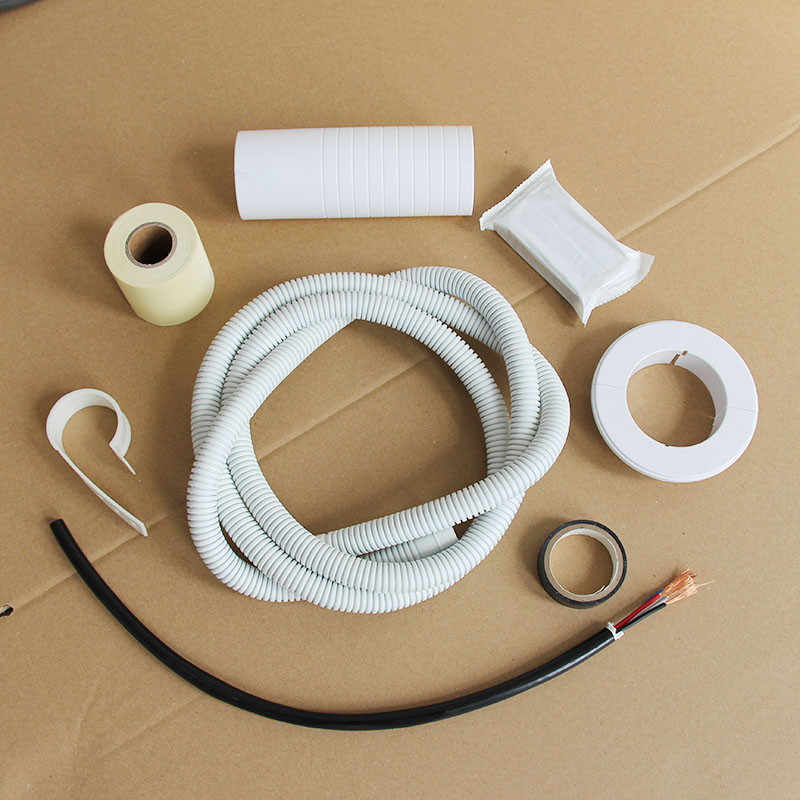
Drainage Components: Cooling air naturally produces condensation. You must route this water away safely. Packages usually include flexible corrugated drain tubing. Sometimes they feature rigid PVC pipes instead. Proper drainage management prevents severe water damage inside your home walls.
HVAC Installation Accessories: Small parts make a massive difference. You need wall sleeves protecting your wall penetrations. Finishing caps provide a clean exterior look. Installers use UV tape and sealant putty sealing off vulnerable connections. Vibration-dampening condenser pads keep the outdoor unit quiet. You can easily find high-quality HVAC installation accessories to complete your setup perfectly.
Evaluation Checkpoint: You should consistently evaluate prospective bundles using a strict criteria list. Try following this simple numbered procedure:
Check the specific length of the copper line set.
Verify the gauge and stranding of the communication wire.
Confirm the inclusion of adequate drainage tubing.
Assess the presence of essential wall caps and sealants.
Missing pieces often indicate a low-tier product. A stripped-down package requires frustrating supplemental purchases. It delays your project timeline significantly while you wait for extra parts.
You cannot simply guess sizes. Precision is mandatory. We always recommend checking the manual first. Let us review the primary specifications you must verify.
System tonnage dictates the required pipe width. You must read manufacturer spec sheets carefully. They tell you exactly how to match your system capacity to the correct liquid and gas lines. Liquid lines often measure 1/4 inch. Gas lines vary more widely. They might measure 3/8 inch, 1/2 inch, or 5/8 inch. A mismatch restricts refrigerant flow instantly. It forces the compressor to overwork.
System Capacity (BTU) | Typical Liquid Line Size | Typical Gas (Suction) Line Size |
|---|---|---|
9,000 BTU | 1/4 inch | 3/8 inch |
12,000 BTU | 1/4 inch | 1/2 inch |
18,000 BTU | 1/4 inch | 1/2 inch |
24,000 BTU | 1/4 inch | 5/8 inch |
You must calculate the exact run between your indoor and outdoor units. Grab a tape measure. Plan your routing path carefully. Account for every bend and corner.
Implementation Reality: Always round up your measurements. For example, buy a 25-foot package for a 20-foot run. You can carefully coil horizontal excess behind the condenser. However, running short poses a massive problem. Extending short lines requires brazing. Brazing complicates DIY projects immensely. It adds unnecessary risks to standard installs. You cannot simply stretch copper piping.
Electrical compatibility ensures safety. Verify the electrical requirements of your condenser unit. Some smaller units run on 110V circuits. Larger multi-zone systems demand 220V power. Ensure the included disconnect box handles these specific loads. If your package includes an electrical whip, check its amperage rating. Overloading a circuit risks catastrophic fire hazards. A proper split air conditioner kit provides components matching these electrical demands precisely.
Material quality directly impacts system longevity. Cheap components degrade quickly under harsh weather conditions. We advise you to scrutinize manufacturing standards closely. Never settle for the cheapest option available.
Thin-walled copper causes countless installation failures. It serves as a primary cause of micro-leaks at flare joints. The flaring process stretches the metal outward. Thin copper cracks under this stress. You lose expensive refrigerant slowly over time. Look for standardized wall thickness preventing this issue. Experts recommend a .032-inch minimum thickness. A robust copper pipe kit withstands high pressures easily. It handles bending safely without kinking.
The protective foam covering matters significantly. You must evaluate this insulation carefully. Standard requirements demand continuous, tear-resistant material. It must also feature UV-treated outer layers. The sun quickly destroys untreated foam. It bleaches the material within months. Degraded insulation causes severe energy loss. Exposed copper alters refrigerant temperatures rapidly. This forces your unit to consume extra electricity. It also allows pipes to sweat profusely in humid climates. Dripping condensation damages exterior walls permanently.
Never compromise on electrical safety. You must ensure the communication wire meets strict safety codes. It should carry a recognized UL-listing mark. Many manufacturers require stranded copper for optimal signal transmission. Solid wire breaks easily under vibration. The jacket must boast ratings for wet or outdoor conditions. Look for THHN/THWN or UF-B designations. Your local building code dictates these exact requirements.
You face two primary purchasing paths. Each approach offers distinct advantages. Your choice depends heavily on project complexity. It also depends on your personal technical experience. Let us break down both options.
Buying an all-in-one package simplifies the entire process. You gain immense convenience. Manufacturers guarantee component compatibility natively. This route works best for standard residential projects. You save time avoiding multiple hardware store trips. A complete AC install kit streamlines the workflow beautifully. However, pre-packaged bundles offer less flexibility for highly unusual routing paths.
Sometimes you must buy parts separately. We recommend this path for complex, multi-zone installations. It suits ultra-long runs exceeding 50 feet perfectly. Custom sourcing allows you to select specific aesthetic routing covers. Standard bundles rarely include premium decorative line hides. You gain ultimate control over every single piece.
You must analyze the true financial impact. Compare the bundled savings of a package against hidden custom costs. Purchasing raw copper rolls seems cheap initially. However, you must also buy individual wire spools. You need specialized flaring tools. Insulation tubes cost extra. Sealants and tapes add up quickly. Bundles almost always provide superior value for standard lengths.
Feature | Pre-Packaged Route | Custom Sourcing Route |
|---|---|---|
Convenience | Extremely high. Everything arrives in one box. | Low. Requires multiple vendor purchases. |
Compatibility | Guaranteed by the manufacturer. | Requires manual verification of every part. |
Flexibility | Limited to standard lengths (15ft, 25ft, etc.). | Unlimited. Ideal for massive commercial runs. |
Tool Requirements | Minimal. Lines often come pre-flared. | High. Requires professional flaring tools. |
Mistakes during installation carry heavy consequences. You face potential financial losses. Safety hazards also become a major concern. We want you to avoid these common pitfalls entirely.
Manufacturers protect themselves rigorously. They dictate exact installation parameters. Using an undersized communication wire instantly voids major warranties. Brands like Mitsubishi, LG, and Daikin enforce these rules strictly. An unapproved line set produces the exact same result. If a compressor fails, technicians check the line sizes first. Incorrect sizing means you pay for the replacement compressor out of pocket.
Inspectors look for specific compliance markers. You must navigate outdoor electrical disconnect placement rules carefully. Codes usually require the disconnect box within sight of the condenser. You must also provide physical protection for the line set. Inspectors often mandate durable line hide covers. They verify properly sloped condensate drainage rigorously. Stagnant water breeds mold. It also damages structural foundations over time. Inspectors check wire gauge markings. They halt your project immediately upon finding incorrect gauges.
Many homeowners begin this as a DIY project. You might mount the units and run the lines yourself. However, you must ensure your purchased materials meet strict professional standards. A licensed HVAC technician will perform the final vacuum testing. They handle the critical refrigerant release. Professionals will flatly refuse to commission a system utilizing substandard materials. They cannot risk their professional license on a dangerous setup. Buy high-quality components from the start to ensure a smooth handoff.
Let us summarize the core decision framework. You must perfectly match pipe diameters to your unit BTU capacity. Prioritize robust copper thickness always. Demand high-quality, UV-resistant insulation. Always ensure strict electrical compliance for safety.
We strongly advise you to cross-reference your specific AC unit installation manual. Do this before finalizing any component purchase. Manufacturer guidelines supersede all general advice. Your system relies entirely on this accuracy. Do not guess.
Take the next step toward a flawless project. Protect your investment properly. Browse vetted, specification-graded materials designed for longevity. Choose a comprehensive A/C Installation Kit categorized by exact length and BTU capacity to ensure total project success.
A: Yes, but we strongly advise against it for non-professionals. Cutting the pipe removes the factory flare. You must use specialized flaring tools to recreate this vital connection. Incorrect flaring causes severe refrigerant leaks. Coiling the excess length horizontally behind the condenser remains the safer alternative. It maintains system integrity and prevents complex repairs.
A: No. DIY-friendly packages usually feature pre-flared lines. They allow quick bolting to the unit fittings. Professional packages often feature raw ends. These raw lines require custom flaring or brazing on-site. You must check the product description carefully. Always verify the flare status before purchasing to match your installation capabilities.
A: It depends on the package tier. Premium bundles often include electrical whips and disconnect boxes. Basic packages typically only include the communication wire. Building codes mandate a local disconnect box near the outdoor condenser. You will likely require a separate purchase to achieve code compliance if buying a basic bundle.
A: We strongly recommend buying new lines. Reusing old pipes poses massive risks. Old pipes often contain incompatible refrigerant oils. Cross-contamination destroys modern compressors quickly. Furthermore, modern R-410A systems operate under much higher pressures than older R-22 systems. Old pipes may rupture under these intense new pressures. Always install fresh materials.


