
Tel:
+86-551-6346-0808
Factory Add:
Plant 5-6, Zhongnan High Tech Industrial Park, Zhegao, Chaohu City, Anhui. 

Views: 0 Author: Site Editor Publish Time: 2026-08-18 Origin: Site
Specifying the wrong commercial piping material isn't just an operational error. It leads to catastrophic system failures, code violations, and costly downtime. Many view pipe selection as a simple task. They assume one type fits all. However, hard-drawn straight pipe serves multiple trades, from mechanical to plumbing. The exact physical properties you need vary drastically. Internal cleanliness and wall thicknesses differ heavily across applications. Using the wrong standard puts your entire project at risk.
This guide provides a detailed technical evaluation framework. We help contractors, engineers, and procurement teams match correct classifications. You will learn to evaluate systems based on performance limits and compliance standards. This ensures you choose the right material for refrigeration, heating, and gas systems confidently. Understanding these nuances prevents major rework. It also protects your reputation in a highly regulated industry.
Standard plumbing copper is not interchangeable with refrigeration pipe. ACR (Air Conditioning and Refrigeration) pipe requires strict internal cleanliness and nitrogen purging (ASTM B280).
Wall thickness dictates application viability. Type K (thickest) is essential for high-pressure or underground gas runs, while Type L and M serve distinct roles in standard heating applications.
Joint integrity defines system lifespan. The choice between high-temperature brazing and mechanical press fittings depends entirely on the operating pressures and fluid/gas type.
Compliance reduces liability. Verifying specific ASTM standards (e.g., B819 for medical gas) is a non-negotiable step in the procurement process.
Treating all straight pipes as commodities causes major issues. You face severe cross-application errors if you ignore classifications. For example, installers sometimes mistakenly use standard water pipe for high-pressure refrigerants. This error compromises system safety immediately. You must recognize the fundamental differences across material grades.
Hard-drawn straight pipe offers distinct structural advantages over annealed coils. These rigid lengths require fewer hanger supports. They also deliver a professional aesthetic in exposed commercial runs. Straight Copper Pipe stays perfectly linear across long ceiling spans. It prevents sagging and ensures proper fluid dynamics. Engineers prefer this rigidity for large-scale commercial building systems.
Contamination poses a severe risk in refrigeration. Non-ACR pipe often contains internal moisture or manufacturing debris. These contaminants react violently inside HVACR systems. They destroy expensive refrigeration compressors almost instantly. Bypassing cleanliness standards carries a massive financial penalty. A ruined compressor costs thousands of dollars to replace, not including lost operational time.
A successful procurement strategy requires precision. You must match the pipe's ASTM designation to your system needs. Evaluate specific fluid dynamics and operational pressure requirements carefully. This precise matching ensures long-term reliability. It also guarantees compliance under the International Mechanical Code (IMC).
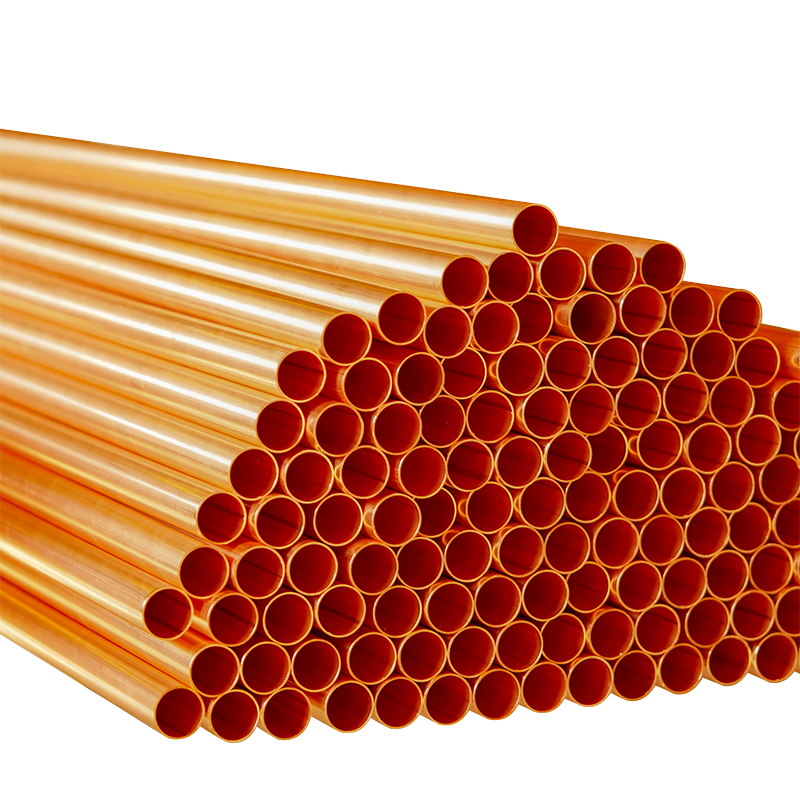
Commercial chillers demand strict material tolerances. Variable Refrigerant Flow (VRF) systems and supermarket refrigeration racks also operate under extreme stress. These applications require dedicated refrigeration copper pipe to function safely. High pressures and extreme temperature fluctuations test the limits of your piping network daily.
True ACR pipe must meet the strict ASTM B280 standard. This standard dictates a rigorous factory cleaning process. Manufacturers wash the pipe interior to remove drawing lubricants completely. They then purge the line using dry nitrogen. Finally, they cap the ends securely. These caps maintain absolute cleanliness during shipping and storage on the job site.
Sizing conventions confuse many new installers. You must note a critical industry distinction here. ACR pipe uses Actual Outside Diameter (OD) for sizing. Conversely, standard plumbing pipe uses Nominal Inside Diameter (ID). A 5/8-inch ACR tube does not equal a 5/8-inch plumbing tube. Mixing these up ruins fitting connections and causes dangerous leaks.
Modern systems use high-pressure refrigerants like R-410A and R-32. These chemicals require specific wall thicknesses to contain them safely. Thinner walls suffer from structural fatigue under continuous pressure cycles. Hard-drawn ACR pipe provides the tensile strength needed to prevent catastrophic bursts over a long operational lifespan.
Heating systems rely on specific material properties to function efficiently. Typical applications include closed-loop boiler connections and radiant heating manifolds. Commercial baseboard runs also depend on reliable piping. Unlike refrigeration, hydronic systems carry hot water or steam, requiring distinct engineering considerations.
Copper boasts exceptional thermal conductivity. This baseline advantage maximizes heat transfer across hydronic networks. The material quickly absorbs and radiates thermal energy. It makes hydronic heating highly efficient. Building owners see tangible reductions in winter energy consumption when systems utilize proper materials.
Contractors usually choose between Type L and Type M for heating runs. The decision impacts both budget and durability.
Type M: Features thinner walls. It remains cost-effective for tight budgets. You can use it safely for low-pressure residential or light-commercial hydronic heating.
Type L: Features thicker walls. It stands as the industry standard for commercial heating copper pipe. It offers superior longevity against internal flow wear.
System longevity depends on more than just material type. You must manage proper water velocity inside the pipe. High velocities erode the inner walls rapidly. Additionally, you need strict pH balancing for boiler water. Poor water quality causes severe erosion-corrosion in straight heating runs. Careful water treatment prevents premature system failure.
Gas distribution requires the highest level of safety scrutiny. Natural gas and propane distribution networks operate under strict codes. Medical gas delivery systems face even tougher regulations. These include life-critical oxygen and vacuum lines. A single failure in these systems causes devastating outcomes.
Fuel gas applications follow stringent local code compliance. Inspectors often mandate Type K or Type L pipe for these systems. Codes strictly prohibit certain fittings in concealed spaces. You cannot use mechanical joints behind sealed walls due to leak risks. Building codes demand seamless runs or properly brazed joints in inaccessible areas.
Medical gas piping requires extreme rigor. Systems must comply with the ASTM B819 standard. This outlines extreme cleanliness requirements for medical facilities. Manufacturers specially wash, purge, and seal these pipes. This prevents patient harm. It also eliminates combustion risks in highly oxygenated hospital environments.
Executing a proper gas pipe connection demands specific joining methods. Medical systems mandate high-temperature brazing. Installers must run a continuous nitrogen purge during brazing. This prevents internal carbon oxidation. Alternatively, fuel gas lines increasingly use specific gas-rated mechanical press fittings. These fittings utilize specialized yellow O-rings approved specifically for fuel delivery.
Procurement teams need a clear shortlisting framework to avoid costly mistakes. You must evaluate suppliers strictly against engineering specifications. Treating technical materials like basic commodities invites risk.
Always use a compliance checklist for supplier quotes. Ensure they specify the exact ASTM standards required. Demand B88 for plumbing and heating. Require B280 for HVACR. Insist on B819 for medical gas. If a distributor cannot provide certification for these standards, disqualify them immediately.
Confirm the hardness and temper of the material. Commercial projects typically require a "hard-drawn" H58 temper. These usually arrive in 10-foot or 20-foot straight lengths. The hard temper provides necessary commercial rigidity for suspended runs. It prevents the sagging common in annealed coil tubing.
Assess fitting compatibility to understand your total installed cost. You must factor in field labor. Traditional brazing requires higher-skilled labor and moves slower. However, the material costs remain lower. Press fittings install much faster. Yet, they require expensive crimping tools and carry higher individual fitting costs. Choose the method fitting your project timeline and labor availability.
Always verify your supply chain. You should check manufacturer traceability directly on the material. Look for incised markings along the straight copper tube. These colored markings indicate the pipe type, manufacturer, and country of origin. This step prevents counterfeit materials from entering your job site.
Application | ASTM Standard | Typical Wall Thickness (Type) | Cleanliness Requirement |
|---|---|---|---|
Standard Plumbing/Heating | ASTM B88 | Type M, L, K | Basic factory clean |
HVACR / Refrigeration | ASTM B280 | ACR specific (OD sizing) | Nitrogen purged & capped |
Medical Gas | ASTM B819 | Type L, K | Specially washed & sealed |
Even the best materials fail if installed incorrectly. Field execution matters immensely. You must oversee installation practices strictly to protect system integrity.
Oxidation during brazing represents a critical field error. Installers sometimes braze joints without an active nitrogen purge. This mistake leaves black carbon deposits inside the pipe. The resulting flakes travel through the system. They quickly foul expansion valves and ruin compressors. Always mandate a low-flow nitrogen purge during brazing operations.
Proper hanger spacing prevents long-term structural failure. You must support hard-drawn pipe at specific intervals. Inadequate support causes sagging. Sagging stresses the joints and creates unwanted traps for fluid condensation. Always consult local codes and manufacturer guidelines for exact spacing requirements.
Galvanic corrosion threatens mixed-material systems. You face high risks when dissimilar metals make contact. For example, copper touching galvanized steel hangers causes rapid degradation. The resulting chemical reaction eats through the pipe wall. You must use dielectric isolation materials. Plastic-coated hangers or rubber isolators prevent this chemical reaction entirely.
Thermal expansion ruins rigid piping networks over time. Long, straight commercial runs experience significant temperature-induced movement. Hot fluids cause the metal to expand outward. You must install expansion loops or mechanical compensators. These devices absorb the movement and protect your fittings from shearing.
The functional success of refrigeration, heating, and gas systems relies on exact material selection. You must choose the precisely engineered straight pipe variant for your specific application. Treating all pipe as equal leads to disastrous failures, code violations, and safety hazards. Proper procurement ensures long-term operational stability.
Follow these action-oriented next steps to ensure project success:
Audit your current project specifications against required ASTM standards immediately.
Consult with licensed mechanical engineers to verify exact OD/ID sizing and wall thickness requirements.
Request verifiable material test reports (MTRs) from your pipe distributors before accepting delivery.
Mandate field inspections to ensure installers use proper nitrogen purging during all brazing operations.
A: No, you should never use standard plumbing pipe for refrigeration lines. Plumbing pipe lacks the strict factory cleaning required for HVAC systems. It often contains internal moisture and manufacturing oils. These contaminants react with modern refrigerants and quickly destroy expensive compressors. Always use ASTM B280 ACR pipe, sized by Outside Diameter (OD), for refrigerant lines.
A: The primary difference lies strictly in their wall thickness and pressure ratings. Type K features the thickest walls and handles extreme pressures or underground burials. Type L offers a medium thickness, serving as the standard for commercial heating and water runs. Type M has the thinnest walls, suitable mainly for low-pressure residential applications.
A: Yes, press fittings are safe for gas connections, provided you use specific gas-rated models. These fittings feature specialized yellow O-rings engineered specifically for fuel gas delivery. However, you must always verify local code approvals. Many jurisdictions strictly prohibit mechanical fittings in concealed wall spaces, regardless of their gas rating.
A: Hard-drawn straight pipe provides superior structural rigidity. This rigidity means it requires far fewer hanger supports across long ceiling spans. It prevents unwanted sagging and ensures consistent fluid flow characteristics. Additionally, straight pipe delivers a clean, professional aesthetic, which is highly preferred for exposed commercial ceiling installations.


